Appart’hotels
Aparthotels occupy a distinct middle ground in the accommodation landscape, blending the self-sufficiency of an apartment with selected hotel services. For travelers facing stays beyond three or four nights, whether for business relocations, extended leisure trips, or family vacations, this hybrid model presents compelling advantages—but only when the fundamentals actually work. The kitchen must be genuinely usable, not decorative. The workspace needs proper lighting and outlets. The housekeeping model should align with your actual needs rather than inflating costs.
Understanding when aparthotels deliver genuine value requires looking beyond nightly rates to examine the total cost equation, the practical functionality of advertised amenities, and the subtle design choices that determine whether a space feels livable or merely inhabits an awkward category between hotel and home.
What Distinguishes Aparthotels from Traditional Hotels
The defining feature of an aparthotel extends beyond simply having a kitchenette. True aparthotels provide separate living areas, cooking facilities with actual capacity (not just a kettle and microwave), and space configured for extended residence rather than overnight stays. Unlike serviced apartments, which typically require weekly or monthly bookings, aparthotels generally accept nightly reservations while offering discounted rates for longer stays.
The service model sits between hotels and apartments. Most aparthotels provide reception desks rather than full concierge services, housekeeping on a reduced schedule (weekly or bi-weekly instead of daily), and hotel-style amenities like gyms or business centers. This reduced service intensity allows lower operating costs—savings theoretically passed to guests, though verification of actual value requires examining the total cost picture.
Physical layout matters enormously. Studio aparthotels combine sleeping, cooking, and living functions in one space, creating potential conflicts. One-bedroom configurations separate these functions, delivering genuinely apartment-like living for solo business travelers or couples willing to pay the premium.
When the Cost Equation Favors Aparthotels
The Four-Night Breakpoint
Industry analysis consistently identifies four to five nights as the threshold where aparthotels begin outperforming traditional hotels economically. This breakpoint emerges from several factors: aparthotel nightly rates typically run 10-20% below equivalent hotels in the same area, weekly discounts often add another 15-25% reduction, and the kitchen allows grocery shopping to replace restaurant meals—potentially saving £15-30 daily per person.
A business traveler paying £120 nightly for a mid-range hotel with £40 daily meal expenses reaches £800 for five nights. A comparable aparthotel at £95 nightly with weekly discount (averaging £85) plus £15 daily for groceries totals £500—a £300 difference that justifies the reduced housekeeping for many travelers.
Hidden Costs That Erode Value
The equation reverses when aparthotels layer unexpected fees. Daily housekeeping charges (£10-15), weekly cleaning fees (£40-50), premium WiFi access (£8-12 daily for speeds supporting video conferences), and grocery delivery services with 30-40% markups can eliminate the cost advantage. Five-night minimum booking requirements during peak periods also reduce flexibility that business travelers particularly value.
Corporate rates at chain hotels sometimes beat aparthotel pricing for shorter stays, especially when breakfast inclusion, loyalty points, and daily housekeeping are factored. The calculation requires comparing total accommodation costs including all fees, meals, and services needed, not just the advertised nightly rate.
Kitchen Facilities: Verifying Actual Usability
Marketing photos showing sleek kitchen spaces rarely reveal whether appliances actually function for real cooking. Verification requires specific questions: Does the hob have at least two functioning burners with adjustable heat control? Are there sufficient pots, pans, and utensils for preparing actual meals, not just reheating? Does the refrigerator provide adequate freezer space for longer stays?
The “hotel kitchenette masquerading as an apartment kitchen” problem appears frequently. Two small induction rings struggle with simultaneous cooking. Tiny refrigerators (under-counter models around 80 liters) lack space for weekly grocery shopping. Missing basics—cutting boards, mixing bowls, adequate knives—force purchases of items you’ll abandon upon checkout.
Request specific appliance details before booking. Ask whether the oven is full-size or a combination microwave-oven (which struggle with actual baking). Confirm the presence of a dishwasher if washing up after long work days seems unappealing. Check whether cookware is non-stick and if basic provisions like oil, salt, and coffee are provided or require purchasing.
Workspace and Business Travel Considerations
The Workspace Basics That Actually Matter
Aparthotel marketing frequently highlights “dedicated workspace,” but execution varies wildly. Functional workspaces require four non-negotiable elements: a proper desk (not a decorative corner shelf), an ergonomic chair with back support, task lighting directed at the work surface, and accessible power outlets—minimum two within reach, ideally four for laptop, phone, monitor, and miscellaneous devices.
The most common failure point is lighting. Overhead ambient lighting creates screen glare and eye strain. Desks positioned by windows seem appealing but cause video conference backlight issues. A dedicated desk lamp with adjustable positioning proves essential for extended work sessions, yet appears in perhaps half of aparthotels claiming workspace amenities.
Technology Infrastructure for Remote Work
WiFi reliability matters more than speed for most business applications. A consistent 15-20 Mbps connection outperforms erratic 100 Mbps service that drops during peak hours. Video conferencing demands upload speeds of at least 3-4 Mbps—a specification rarely advertised but critical for avoiding frozen-screen experiences during morning meetings.
Request WiFi specifications before booking, specifically asking about upload speeds and whether bandwidth is throttled or shared across all units. Business-oriented aparthotels increasingly offer dedicated work-tier WiFi at premium rates (£5-10 daily)—worth considering for video-heavy work rather than risking the standard connection during important presentations.
Housekeeping Models and Their Cost Implications
Traditional hotels provide daily housekeeping as standard. Aparthotels typically offer three models: weekly housekeeping included in the base rate, mid-stay cleaning (every 3-4 days) at moderate additional cost, or daily service at premium charges often matching or exceeding hotel rates.
Understanding which model suits your needs prevents both overpaying and unpleasant surprises. Solo business travelers on 10-day trips often find weekly housekeeping adequate if the unit includes a washer or laundry access. Families with children typically need more frequent cleaning to maintain livability. The assumption that daily cleaning is included—a reasonable expectation from hotel experience—costs guests £10-20 daily when added after arrival.
Calculate housekeeping costs when comparing accommodations. An aparthotel at £90 nightly with £45 weekly cleaning averages £96.40 across seven nights—still competitive with £110 hotel rates, but the margin narrows. Opt-in daily cleaning at £15 pushes the true rate to £105, eliminating much of the cost advantage while delivering less comprehensive service than hotel housekeeping.
Space Design: Why Square Footage Can Mislead
A 40m² aparthotel studio can feel noticeably more cramped than a 30m² purpose-built apartment—a paradox explained by layout efficiency and functional zoning. Aparthotels optimized for maximum unit count often create long, narrow spaces with poor furniture placement, wasted corridor areas, and awkward kitchen positioning that consumes space without adding utility.
The kitchen-in-sleeping-space configuration particularly affects perceived spaciousness. A galley kitchen along one wall of a studio occupies 4-6m² and creates a visual division that fragments the remaining space. One-bedroom aparthotels with separate kitchens in the living area deliver superior spatial efficiency, though at 25-40% price premiums.
Storage inadequacy compounds space issues during extended stays. Hotel-style closets (1.2-1.5 meters wide) prove insufficient for month-long stays requiring business and casual clothing. Verify drawer space beyond the closet—dressers or built-in drawers for folded items separate functional aparthotels from those forcing suitcase-living throughout your stay.
Technology and Amenities Worth the Premium
Aparthotels increasingly charge tiered rates based on technology packages. Understanding which amenities deliver actual value versus marketing appeal prevents overpaying for features you won’t use while ensuring you secure capabilities that matter for your specific needs.
Smart room controls—app-based climate, lighting, and blind adjustment—appeal more to technology enthusiasts than typical guests. Traditional thermostats, light switches, and curtains work reliably without requiring app downloads or troubleshooting failed connections. Unless the smart system genuinely adds convenience for your usage pattern, it rarely justifies £20-30 nightly premiums.
In-unit washers and dryers, conversely, deliver substantial value for stays exceeding one week. The ability to pack half the clothing and refresh items mid-stay outweighs shared laundry rooms requiring coordination and monitoring. Premium rates of £10-15 nightly for washer-equipped units become cost-neutral when eliminating laundry service fees (£8-12 per load) after just a few uses.
Prioritize fundamentals—reliable internet, functional workspace, adequate kitchen equipment—over aspirational amenities that photograph well but rarely enhance the stay experience. Technology that substitutes for rather than supplements basic functionality often creates more frustration than value, especially when systems malfunction without simple manual overrides.

Amenity-Washing: How to Verify an Aparthotel’s Tech Is Functional, Not Fake
Most ‘modern’ aparthotel amenities are outdated due to slow renovation cycles; guests need a verification strategy, not blind trust. Pre-booking verification is non-negotiable for critical amenities like WiFi, kitchen appliances, and dedicated workspaces. Prioritise foundational technology (fast WiFi, accessible outlets)…
Read more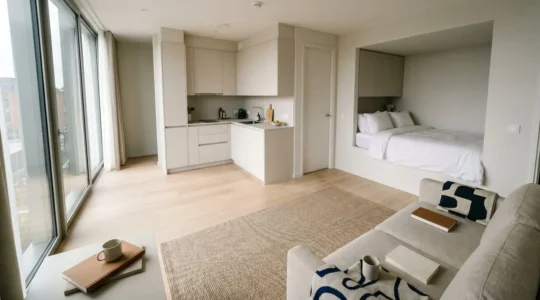
How to Choose Aparthotel Layouts That Maximize Livable Space?
The advertised square footage of an aparthotel is often a poor indicator of its true livable space; layout efficiency is the critical metric. The perception of space is dictated by functional zoning and the elimination of “dead space,” not just…
Read more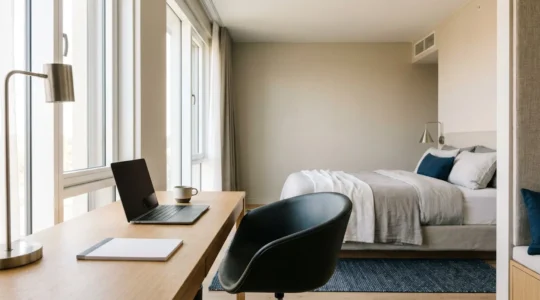
Structuring Your Hotel Stay: A Blueprint for Peak Business Performance
Unproductive hotel stays aren’t a matter of willpower; they’re a failure of workflow design. True productivity requires pre-trip verification of core facilities, not just assuming they exist. The key is to create strict physical and mental boundaries between “work” and…
Read more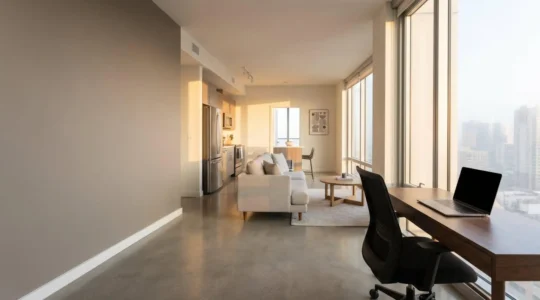
Which Aparthotel Extra Services Actually Enhance Extended Stays?
The true value of any aparthotel service is not its price, but its “Return on Time” (ROT) for your specific stay profile. Housekeeping and grocery services offer high ROT on arrival and for time-poor professionals but diminish for budget-conscious or…
Read more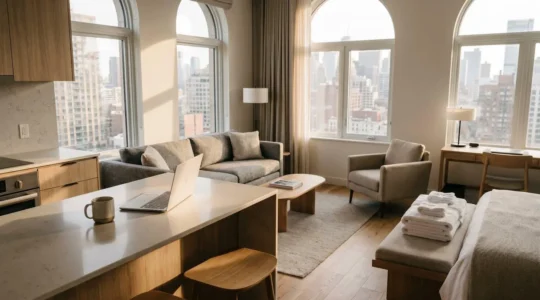
When Do Aparthotels Make More Sense Than Traditional Hotels?
The economic tipping point for choosing an aparthotel over a hotel isn’t about a lower nightly rate; it’s a calculable breakeven analysis that typically occurs around the fourth night. For stays of 4+ nights, quantifiable savings on self-catering and reduced…
Read more
How to Choose Paris Business Hotels That Don’t Waste Your Time?
Choosing the right Paris business hotel isn’t about luxury or a central address; it’s a strategic process of eliminating operational friction to maximize your work output. The true cost of a hotel includes lost time from inefficient commutes, poor Wi-Fi,…
Read moreWhy aparthotels are perfect for long term stays away from home?
In an era of increasing global mobility and extended business trips, the demand for comfortable, flexible accommodation has never been higher. Aparthotels have emerged as a popular solution, bridging the gap between traditional hotels and residential apartments. These innovative lodging…
Read more
7 features that make aparthotels ideal for business trips
Business travel can be demanding, requiring professionals to maintain productivity while away from their usual workspace. Aparthotels have emerged as a popular accommodation option, offering a blend of hotel amenities and the comforts of home. These versatile properties cater specifically…
Read more
What to expect from a 5 star aparthotel: the ultimate luxury experience
Luxury travel has evolved, and discerning travelers now seek accommodations that offer the perfect blend of opulence, comfort, and personalized service. Enter the world of 5-star aparthotels, where the lavishness of a high-end hotel meets the spaciousness and convenience of…
Read moreDiscover why aparthotels prioritize your comfort and convenience
Aparthotels have revolutionized the hospitality industry by seamlessly blending the comforts of home with the luxuries of a hotel. These innovative accommodations cater to the evolving needs of modern travelers, whether you’re on an extended business trip or seeking a…
Read more