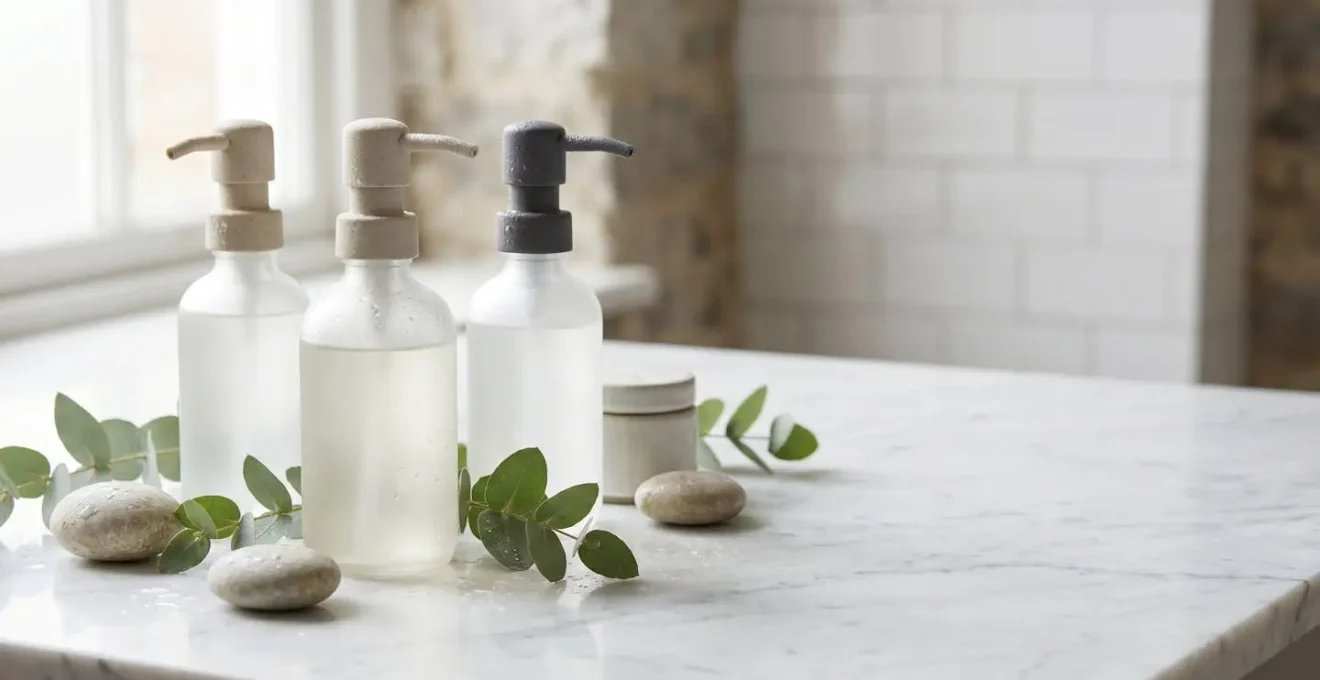
That luxury brand toiletry in your hotel room is likely not the same product you’d buy in a store.
- Formulations are often created under license specifically for the hospitality market, prioritizing cost over the ingredient quality of their retail counterparts.
- The ingredient list (INCI), not the brand name, is the only reliable measure of a product’s true quality and suitability for your skin.
Recommendation: Shift your focus from brand recognition to formulation forensics; learn to read the INCI list and assess the quality of the dispenser hardware to determine real value.
You’ve likely felt that small thrill of recognition: checking into a luxury hotel and spotting a line of toiletries from a high-end brand like Byredo, Le Labo, or Aesop. It feels like an implicit promise of quality, a confirmation that the room rate is justified by attention to detail. Yet, for many skincare-conscious travellers, that initial excitement often gives way to a subtle disappointment. The shampoo doesn’t lather the same way, the lotion feels thinner, and the scent seems a faint echo of the retail version. You are not imagining it.
The common advice to simply “look for big brand names” is a platitude that has become increasingly unreliable. In the world of hotel amenities, the brand on the bottle is often just the beginning of the story, not the conclusion. The reality of hospitality procurement, third-party licensing, and formulation science creates a significant gap between the product you see and the product you think you’re getting. This guide is built on a different premise, one that moves beyond brand worship and into forensic assessment.
Instead of trusting the logo, what if the key was to decode the product itself? This guide will provide you with the framework of a professional amenities assessor. We will dissect why those hotel versions feel different, teach you how to read an ingredient list like a chemist, analyze the signals sent by dispensers versus bottles, and ultimately reveal when hotel toiletries stop being a simple commodity and start adding genuine, memorable value to your stay. It’s time to ensure the luxury you pay for is the luxury you actually get.
This comprehensive guide provides a structured approach to evaluating the true quality of hotel amenities. Follow along as we break down the key indicators, from formulation analysis to sustainability claims, empowering you to become a more discerning traveller.
Summary: A Guide to Assessing Hotel Amenity Quality
- Why Don’t Hotel Versions of Luxury Brands Feel the Same?
- How to Verify Hotel Toiletry Claims Match Your Skincare Standards?
- Refillable Pump Dispensers or Individual Bottles: Which Signals Luxury?
- The Hotel Toiletries They Don’t Refill After Day One
- When Do Hotel Toiletries Actually Add Value to Your Stay?
- How to Avoid Disappointing Hotel Spa Treatments?
- How to Spot the Tiny Hotel Details That Reveal True Care?
- How to Identify Truly Sustainable Hotels Versus Greenwashing?
Why Don’t Hotel Versions of Luxury Brands Feel the Same?
The primary reason for the discrepancy between a retail luxury product and its hotel counterpart lies in a practice known as third-party licensing. When a hotel chain decides to feature a prestigious brand, they are often not buying the exact off-the-shelf product. Instead, they enter into an agreement where a specialized hospitality supplier manufactures the toiletries *under license*. This creates what industry insiders call the “licensing loophole.” The product carries the recognized brand name and logo, but the formulation is entirely different, engineered to meet the hotel’s budget and large-scale procurement needs.
This distinction is crucial for understanding quality. As revealed in an investigation into hotel toiletries, these licensed formulations often use more cost-effective base ingredients, lower concentrations of expensive active compounds, and different fragrance compositions. The goal for the manufacturer is to create a product that is “good enough” to uphold the brand’s image in a hotel context, but at a fraction of the cost of the retail version. This is not necessarily deceptive, but it is a standard industry practice that savvy travellers should be aware of.
As Anna Abelson, an instructor at NYU’s Tisch Institute of Hospitality, explains, the disconnect is fundamental to the business model:
Some hotel toiletries may look like retail name-brand products, but they’re often formulated and sourced differently to meet hospitality industry needs. This can cause variations in quality and composition compared to store-bought versions.
– Anna Abelson, Adjunct Instructor at NYU School of Professional Studies’ Tisch Institute of Hospitality, Islands Magazine Investigation on Hotel Toiletries
Therefore, the brand on the bottle should be seen as a marketing partnership rather than a direct guarantee of retail-level quality. The real proof is found elsewhere: in the fine print on the back of the bottle.
How to Verify Hotel Toiletry Claims Match Your Skincare Standards?
Since the brand name can be a misleading indicator, the only true ground for assessing a product’s quality is its ingredient list. This is where you can move from being a guest to being a forensic assessor. Every cosmetic product is legally required to list its ingredients using the International Nomenclature of Cosmetic Ingredients (INCI) system. Learning to read this list is the single most powerful skill a skincare-conscious traveller can possess. It allows you to see past the marketing and analyze the actual formulation of the product in your hands.
The INCI list is not as intimidating as it looks. The key is knowing what to look for. Ingredients are listed in descending order of concentration, so the first five ingredients typically make up the bulk of the formula. This is where you can instantly spot the difference between a premium product and a cost-effective one. Is the list headed by gentle, plant-derived surfactants and hydrating agents like glycerin, or does it lead with harsh sulfates (like Sodium Laureth Sulfate) and drying alcohols? The answer reveals the true intention behind the formulation.
As this image suggests, the details matter immensely. While the text itself is a texture, it represents a wealth of information. To truly master this, you need a systematic approach. The following checklist provides a five-step method for quickly analyzing any hotel toiletry INCI list to determine if it meets your personal skincare standards.
Your Action Plan: 5 Steps to Decode an INCI List
- Ingredient Order: The INCI list is arranged in descending order by concentration. If ‘Aqua’ (Water) is first and a desirable active ingredient like ‘Niacinamide’ appears after ‘Parfum’ (Fragrance), its concentration is likely less than 1% and functionally negligible.
- Base Ingredients: Scrutinize the first 3-5 ingredients, which constitute 60-80% of the product. Water, Glycerin, and primary surfactants (e.g., Coco-Glucoside) will reveal the quality of the product’s foundation.
- Red Flags: Identify potentially irritating ingredients high on the list. The presence of Sodium Laureth Sulfate (SLES), Alcohol Denat., or parabens near the top often indicates a formulation focused on cost rather than skin health.
- Botanical Names: Recognize plant-based ingredients by their Latin nomenclature (e.g., ‘Lavandula Angustifolia’ for lavender oil). Their position on the list tells you if they are a core functional part of the formula or just ‘label decoration’ at a low concentration.
- Cross-Reference with a Database: For a deeper dive, use a free online tool like INCIDecoder.com. You can input the full ingredient list to get a science-based breakdown of each component’s function, benefits, and potential drawbacks. This turns a simple list into a powerful analysis.
Refillable Pump Dispensers or Individual Bottles: Which Signals Luxury?
The debate between large, refillable dispensers and tiny, single-use bottles is no longer just about sustainability; it’s a complex indicator of a hotel’s approach to luxury, hygiene, and guest trust. The old platitude that individual bottles are inherently more luxurious is outdated. Today, the quality signal is found not in the format, but in the execution and transparency of the system. A high-end, tamper-proof dispenser system from a trusted brand is a far stronger signal of quality than a generic plastic bottle of unknown origin.
Luxury hotels are increasingly adopting “dispenser systems” that balance environmental concerns with a premium experience. These are not the cheap, refillable pumps you might find at a budget motel. Instead, they are often custom-designed hardware, made from metal, glass, or stone, featuring sealed, tamper-proof cartridges. Brands like Aesop, Le Labo, and Molton Brown now offer sophisticated wall-mounted systems that provide both brand visibility and a guarantee of product integrity. The key is the sealed system: it ensures that the product inside is genuine and has not been diluted or contaminated.
Conversely, a generic, unbranded plastic pump dispenser is a major red flag. It signals a cost-first approach where the hotel is likely refilling it with a low-cost bulk liquid, completely severing the connection between the guest and the product’s origin. The following table breaks down the specific quality indicators to look for in both dispenser and individual bottle formats, helping you decode these important “hardware signals.”
| Quality Indicator | High-End Dispenser Systems | Premium Individual Bottles | Budget Dispensers (Red Flag) |
|---|---|---|---|
| Brand Visibility | Molton Brown, Aesop, Le Labo wall-mounted systems with brand engraving | Branded glass bottles with custom hotel scent (e.g., Byredo Le Chemin for Luxury Collection) | Generic unbranded plastic pumps |
| Hardware Quality | Tamper-proof, designer-crafted metal or glass housings | Heavy glass, aluminum, or ceramic containers | Flimsy plastic, loose pump action |
| Hygiene Signal | Sealed cartridge replacement system, lockable | Individually sealed, new for each guest | Open refillable bottle with no seal |
| Sustainability Approach | Refillable glass/aluminum with certified product inside | Recyclable glass with take-home value | Plastic pump refilled with unknown bulk liquid |
| Guest Trust Indicator | Product available for purchase in hotel gift shop | Full-size retail equivalent visible at check-in | No brand information or source transparency |
The Hotel Toiletries They Don’t Refill After Day One
Ever noticed that after the first night of a multi-day stay, the full set of bathroom amenities is never quite the same? The shampoo and shower gel are dutifully replaced, but the conditioner, body lotion, and that little vanity kit seem to vanish from the housekeeping cart. This isn’t an oversight; it’s a deliberate, cost-saving strategy based on decades of guest usage data. Understanding this internal “replenishment hierarchy” can help you manage your expectations and ensure you have what you need for your entire stay.
According to an analysis of hotel housekeeping standard operating procedures, there’s a clear triage system for amenities. Here’s how it typically breaks down:
- Daily Replenishment: Shampoo and body wash. These are considered high-usage, essential items and are almost always replaced during daily service.
- Conditional Replenishment: Conditioner and body lotion. Usage for these items varies wildly. Housekeeping protocols often dictate that these are only replaced when visibly low, upon guest request, or during a full room turnover between guests.
- Once-Per-Stay Items: This category includes vanity kits (cotton swabs, nail file), sewing kits, shoe-shine mitts, and shower caps. These are considered “just-in-case” items and are provided once upon check-in. They are not automatically restocked.
This system is designed for maximum efficiency and minimum waste from the hotel’s perspective, but it can be frustrating for guests who, for example, have long hair and use far more conditioner than shampoo. The key to navigating this is proactive communication. Don’t wait until you’re out of lotion; a simple request to housekeeping can ensure you’re well-stocked. Knowing the right way to ask can make all the difference, turning a potential annoyance into a moment of personalized service.
When Do Hotel Toiletries Actually Add Value to Your Stay?
After dissecting formulations and replenishment policies, it’s easy to become cynical. So, when do hotel toiletries transcend their function as a mere commodity and genuinely enhance the travel experience? The answer lies in the shift from providing a product to curating a discovery. True value is created when a hotel uses its amenities program not as a cost to be minimized, but as an opportunity to introduce guests to something new, authentic, and memorable. This is the difference between a “freebie” and a luxury experience.
This value is most often found when hotels partner with niche, artisanal, or local brands. Instead of a globally recognized name that has been diluted for the hospitality market, they choose a high-quality product that reflects the hotel’s location, ethos, or design aesthetic. It might be a small-batch, organic skincare line from a local producer, a custom-scented collection developed exclusively for the property, or a cult-favorite brand that isn’t yet a household name. This approach transforms the bathroom vanity into a boutique, offering a sense of place and discovery that a generic luxury brand cannot.
This thoughtful curation adds value in several ways. First, it demonstrates genuine care and a commitment to quality over mere brand recognition. Second, it creates a memorable sensory link to the travel experience—the scent of the lotion forever reminds you of your stay in that specific location. Finally, it provides a “take-home” value that is more than just the product itself; it’s the discovery of a new favorite brand. As one luxury hotel consultant aptly put it in an analysis of top hotel toiletries:
The real value is not the ‘free’ product, but when a hotel introduces you to a niche, high-quality brand you’ve never heard of. This transforms the amenity from a commodity into a curated, memorable experience.
– Luxury hotel brand consultant and toiletries expert, One Mile at a Time Hotel Toiletries Analysis
How to Avoid Disappointing Hotel Spa Treatments?
The same forensic assessment you apply to in-room toiletries is even more critical when investing in a hotel spa treatment. A disappointing massage or facial is not just a waste of money; it’s a lost opportunity for relaxation and rejuvenation. To avoid this, you must move beyond the glossy spa menu and ask targeted questions before you book. The quality of a treatment is determined by two factors: the skill of the therapist and the quality of the products used. Both can be verified.
First, inquire about the therapists. It is perfectly acceptable to ask about their certifications, specializations, and years of experience. A high-end spa will be proud to share this information. Ask questions like, “Who is your most experienced therapist for deep tissue massage?” or “Does your esthetician have specific training in treating sensitive skin?” This shows you are a discerning client and helps the spa manager pair you with the right professional.
Second, and just as important, is to scrutinize the product line. A spa’s choice of products speaks volumes about its philosophy. Don’t be swayed by vague terms like “natural” or “organic.” Ask for the specific brand name. If you don’t recognize it, ask about the brand’s philosophy. A great follow-up question is, “Could I see the ingredient list for the facial oil you would use?” This brings your INCI intelligence skills from the bathroom to the spa. A truly confident, quality-focused spa will have no issue with this request. If they are evasive or unable to provide this information, it’s a significant red flag that they may be using generic, low-quality professional products while marketing a luxury experience.
How to Spot the Tiny Hotel Details That Reveal True Care?
While premium toiletries are a visible sign of luxury, a hotel’s true commitment to quality and guest care is often revealed in a collection of much smaller, less obvious details. A truly exceptional hotel understands that luxury is not a single, grand gesture, but the sum of a thousand thoughtful touches. Learning to spot these details allows you to assess the operational excellence of a property, which is often a better predictor of a great stay than the brand name on the door.
Start by looking beyond the obvious. Instead of just noting the brand of the toiletries, assess their presentation. Are they neatly aligned on a dedicated tray? Is there a fresh, folded washcloth alongside them? These are signs of a meticulous housekeeping standard. This attention to detail is paramount, as industry studies consistently show that cleanliness is the most important factor in guest satisfaction. It’s the foundation upon which all other luxury experiences are built. Indeed, some reports indicate that as many as 87% of hotel guests consider cleanliness the top priority in their overall experience.
This principle extends throughout the room. Consider these subtle indicators of true care:
- Hangers: Are they a mismatched collection of flimsy wire, or are they uniform, high-quality wooden hangers, including some designed for skirts or trousers?
- Lighting: Are the light switches intuitive and easy to find? Is there a dedicated, dimmable reading light by the bed?
- Power Outlets: Are there easily accessible outlets and USB ports near the bedside tables and desk, or must you hunt for them behind furniture?
- Water: Is the complimentary water in a plastic bottle, or has the hotel invested in a more sustainable solution like filtered water in reusable glass bottles?
- Turndown Service: Is it a simple turning down of the covers, or does it include a small, thoughtful touch like a piece of local chocolate, a weather card for the next day, and a neatly placed bookmark in your book?
These details may seem minor individually, but collectively they paint a picture of a hotel that is truly guest-centric, anticipating needs and investing in comfort beyond the bare minimum. They are the silent language of hospitality, speaking volumes about the property’s commitment to genuine care.
Key takeaways
- Hotel versions of luxury toiletry brands often use different, more cost-effective formulations than their retail counterparts due to licensing agreements.
- The ingredient list (INCI) is the only reliable way to verify product quality; the brand name on the bottle can be misleading.
- High-end, tamper-proof dispenser systems and thoughtful sustainability partnerships are now stronger indicators of modern luxury than small, disposable plastic bottles.
How to Identify Truly Sustainable Hotels Versus Greenwashing?
In the hospitality industry, “sustainability” has become a powerful marketing term. Unfortunately, this has led to a rise in “greenwashing,” where hotels make misleading claims about their environmental practices to attract eco-conscious travellers. When it comes to toiletries, this is particularly rampant. The challenge for a discerning guest is to separate genuine commitment from superficial marketing. A truly sustainable hotel integrates eco-friendly practices deeply into its operations, while a greenwashing hotel simply puts an “eco” label on a plastic bottle.
One of the most visible trends is the move away from single-use plastics. According to the 2024 Green Lodging Trends Report, 67.3% of properties globally have now adopted alternatives to single-use plastic water bottles, and a similar shift is happening with toiletries. However, simply replacing small bottles with a large plastic dispenser is not, in itself, a mark of true sustainability. You must look deeper. Is the dispenser made from recycled materials? Is the product inside from a brand with verifiable environmental credentials, such as B Corp or Leaping Bunny certification? Is the hotel transparent about how the dispensers are refilled and what happens to the empty cartridges?
Genuine sustainability goes beyond just reducing plastic. It encompasses the entire lifecycle of the product. This includes the formulation (are the ingredients biodegradable and responsibly sourced?), the packaging (is it truly recyclable or compostable?), and the end-of-life (does the hotel partner with a program like Clean the World to recycle used soap and plastic?). The following table highlights the key differences between a genuine sustainability effort and a greenwashing red flag in the context of hotel toiletries.
| Sustainability Indicator | Genuine Commitment | Greenwashing Red Flag |
|---|---|---|
| Dispenser System Quality | Glass or aluminum refillable bottles from B Corp or Leaping Bunny certified brands (e.g., Aesop, Bamford) | Generic plastic pump with no brand credentials or certifications |
| End-of-Life Cycle | Partnership with Clean the World or similar organizations that recycle used soap and plastic into hygiene kits for communities in need | No visible recycling program or vague ‘we recycle’ claims without named partner |
| Product Format Innovation | Solid shampoo and conditioner bars, waterless formulations, or concentrated refill systems eliminating plastic entirely | Plastic dispensers labeled ‘eco-friendly’ with no details on product formulation or water footprint |
| Brand Certifications | Products display B Corp, Leaping Bunny (cruelty-free), EWG Verified, or organic certifications with verifiable codes | ‘Natural’ or ‘eco’ labels without third-party certification or verification |
| Transparency | Informational cards explaining sourcing, water footprint reduction, carbon neutrality of production, and circular economy efforts | Generic ‘green initiative’ messaging without measurable data or specific actions |
The next time you check in, don’t just see a bottle of shampoo; see a data point. Start applying this assessment framework to transform your travel experience, ensuring the luxury you pay for is the luxury you get, both in quality and in conscience.