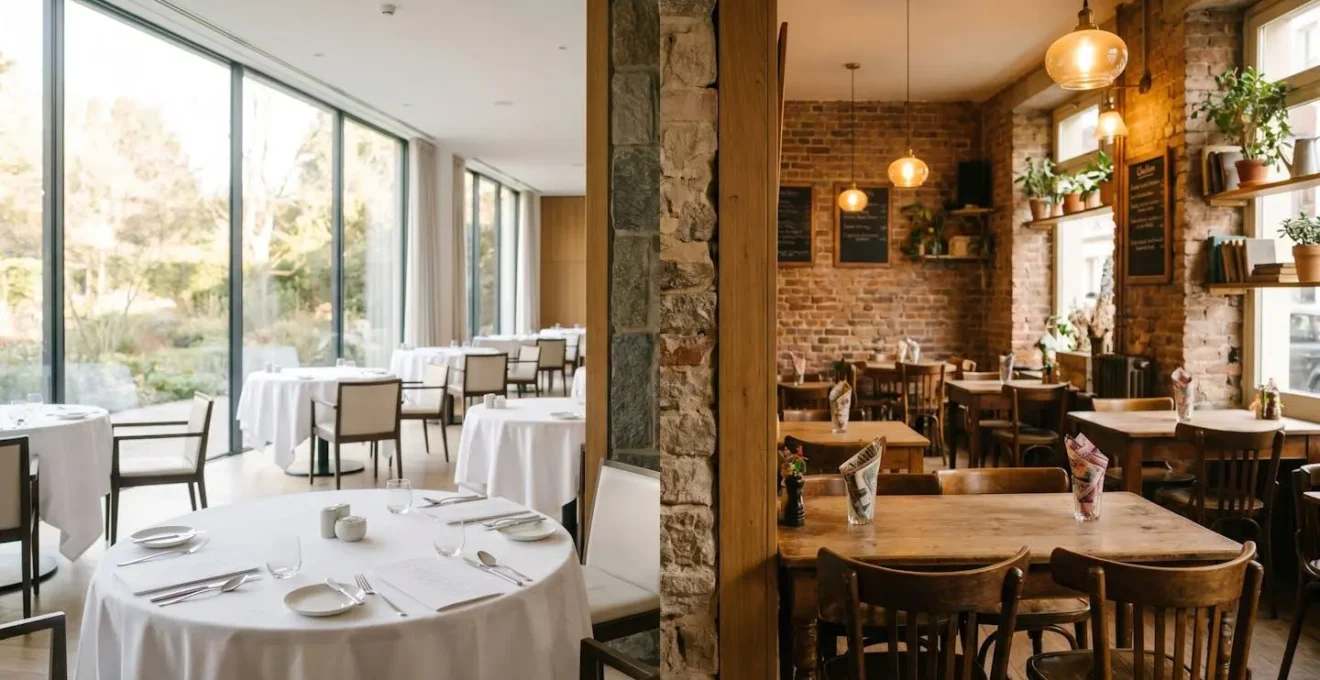
The quality of a hotel restaurant is a direct signal of its strategic intent, not just a matter of convenience or price.
- High operational costs (like specialized labor) often justify higher prices, but only if matched by exceptional quality and sourcing.
- The true measure of a destination-worthy establishment is its ability to attract a significant local clientele, not just serve hotel guests.
Recommendation: Learn to read the “operational signals”—from the quality of the breakfast buffet to the composition of the bar crowd—to assess whether you’re paying for genuine culinary excellence or just a captive-audience markup.
The dilemma is universal for any tired traveller. You’ve checked in, unpacked, and the thought of navigating a new city for dinner feels exhausting. The hotel restaurant, just an elevator ride away, beckons with the promise of convenience. But this convenience often comes with a steep price and a nagging question: is the food any good, or am I just paying a premium for proximity? Many travellers resign themselves to the idea that hotel dining is a compromise, a choice made for ease over excellence, and that “authentic” experiences are only found in bustling neighbourhood bistros.
The common advice is to check online reviews or look for a dining room busy with locals, but these are lagging indicators. The real skill lies in diagnosing a restaurant’s quality before you even sit down. As a quality assessor, I’ve learned that a hotel’s food and beverage (F&B) offering is never an accident; it’s a strategic decision. It’s either a loss-leading amenity, a cynical profit center, or a genuine, brand-defining destination. The key is not to ask if hotel restaurants are “good” or “bad,” but to understand their purpose.
This guide will equip you with an assessor’s mindset. We will move beyond the simplistic convenience-versus-authenticity debate and give you the tools to decode the operational signals that betray a hotel’s true culinary ambition. You will learn to identify the subtle clues—in the menu, on the breakfast buffet, and even in the room service options—that separate a world-class dining experience from a mediocre one. By understanding the ‘why’ behind the hotel’s F&B strategy, you can confidently decide when to stay in and when to venture out.
To help you navigate this assessment, this article breaks down the key indicators and strategic questions. The following summary outlines the path to becoming a discerning judge of hotel dining quality.
Summary: When Do Hotel Restaurants Actually Match Neighbourhood Dining Quality?
- Why Does the Same Dish Cost £28 in the Hotel Versus £18 Outside?
- How to Know if the Hotel Restaurant Is Worth Eating At?
- Michelin-Starred Hotel Restaurant or Casual Lobby Bar: Which Delivers Better Value?
- The Room Service Temperature Problem That Ruins 60% of Orders
- When Are Hotel Bars Destination-Worthy Beyond Guest Convenience?
- Historic 1900s Brasserie or Contemporary Reinvention: Which Feels More Parisian?
- How to Spot Fake Regional Dishes Created for Tourists?
- How to Ask Hotel Staff Which Local Dishes You’re Actually Missing?
Why Does the Same Dish Cost £28 in the Hotel Versus £18 Outside?
The price difference between a hotel restaurant and a local establishment is the first and most obvious point of friction for guests. It’s easy to assume this is pure price gouging, targeting a captive audience. While that can be a factor, the reality is rooted in a fundamentally different operational and cost structure. A standalone restaurant’s costs are straightforward; a hotel’s F&B department is a complex ecosystem of services, including breakfast, lunch, dinner, room service, and banqueting, often operating 24/7.
This extended operation requires significantly higher staffing levels and specialized roles. Indeed, data shows a staggering 15% increase in F&B labor costs in 2024 alone, far outpacing other hotel departments. These costs, from union-negotiated wages to the salaries of sommeliers and pastry chefs, are baked into the price of your club sandwich. Furthermore, hotels carry immense overheads for real estate, utilities, and compliance that are allocated across all revenue streams, including the restaurant.
However, this premium price must be justified by a premium product. In the best cases, the higher cost grants you access to a level of quality and expertise that most independent restaurants simply cannot afford. This is where the hotel’s strategic intent becomes clear.
Case Study: The Four Seasons George V, Paris
At Le Cinq, the showpiece restaurant of the Four Seasons Hotel George V, a tasting menu from chef Christian Le Squer is priced at 580 euros. This price reflects not just the hotel’s operational costs but also access to world-class culinary mastery and ingredients like Vaucluse black truffle and Royal Ossetra caviar. The hotel is home to three separate Michelin-starred restaurants, as detailed in a curation of Michelin-grade hotel dining. This demonstrates a clear strategic decision: the restaurant is not an amenity; it is a globally recognized destination, and the price is a reflection of that exclusive status.
Ultimately, a high price tag should be a promise of superior quality, not just a tax on convenience. Your job as a discerning guest is to determine if the hotel is living up to that promise.
How to Know if the Hotel Restaurant Is Worth Eating At?
The single most reliable diagnostic for a hotel’s entire F&B operation is the breakfast buffet. It’s the one meal almost every guest experiences, and the effort a hotel puts into it is a direct reflection of its commitment to quality. Before you even consider booking a table for dinner, conduct a thorough assessment of the morning service. This is where you find the first and most crucial operational signals.
Ignore the sheer quantity of items. A massive spread of mediocre food is a red flag. Instead, focus on the details. Is the bread and pastry selection baked in-house, or is it a generic, frozen-and-reheated assortment? Look for quality indicators: a proper crust, a dense crumb, the flaky layers of a croissant. How is the coffee? Is it a push-button machine dispensing murky liquid, or are there trained baristas pulling proper espresso shots? Is the orange juice freshly squeezed or from a concentrate-filled dispenser? These details reveal everything.
As the image suggests, quality is tactile. A hotel that cares will invest in high-quality, single-origin coffee, offer a selection of non-dairy milks without you having to ask, and ensure the hot food (like eggs and bacon) is cooked in small, fresh batches rather than languishing in a chafing dish for hours. If a hotel can’t get breakfast right, it has no chance of delivering a quality dinner. If, however, the breakfast demonstrates a clear focus on freshness, quality ingredients, and thoughtful execution, you can be cautiously optimistic about its other culinary offerings.
Think of the breakfast buffet as the restaurant’s resume. If it’s impressive, it’s worth scheduling an interview (dinner). If it’s sloppy and full of shortcuts, decline and look elsewhere.
Michelin-Starred Hotel Restaurant or Casual Lobby Bar: Which Delivers Better Value?
The concept of “value” in hotel dining is often misunderstood. It is not simply about finding the cheapest meal. True value lies in the ratio of quality to price. A £100 tasting menu that delivers an unforgettable culinary experience can offer far better value than a £25 mediocre burger. The presence of a high-end restaurant is a strategic asset for luxury hotels, as research shows that 60% of luxury travelers prioritize staying at hotels with great restaurants.
This creates an opportunity for savvy guests to engage in what I call “value arbitrage.” The hotel’s halo restaurant—often with a Michelin star—operates with the highest standards, the best ingredients, and the most talented kitchen team. While dinner there might be prohibitively expensive, the same kitchen often services other, more casual outlets in the hotel, such as the lobby bar or a less formal bistro. By choosing these venues, you can often experience the same level of ingredient quality and technical skill at a fraction of the price.
Look for the bar menu that offers a “Club Sandwich.” At a top-tier hotel, this isn’t just a simple sandwich; it’s a showcase. It will likely be made with house-roasted turkey, artisanal bread, and produce sourced by the same team that supplies the fine-dining kitchen. You’re getting the B-side from a world-class artist, which is often more interesting and a much better value than the greatest hits from a mediocre one.
Case Study: Value Arbitrage at Le Royal Monceau, Paris
The Michelin-starred Italian restaurant Il Carpaccio at Le Royal Monceau — Raffles Paris is a prime example of this strategy. While a full dinner commands a premium price, the same kitchen offers a weekly-changing, two-course lunch menu for a much more accessible 70 euros. This provides guests access to Michelin-level standards and ingredients in a more casual format, proving that the greatest value is often found by understanding the timing and format of the offering, not just its location.
Therefore, the question isn’t whether the formal restaurant or the lobby bar is “better.” The strategic choice is to use the casual venue to access the quality of the formal one, maximizing your return on every pound spent.
The Room Service Temperature Problem That Ruins 60% of Orders
Room service is the ultimate convenience, but it’s also the culinary challenge with the highest degree of difficulty. The single greatest enemy of a good room service meal is time and distance. The journey from a basement kitchen, up a service elevator, and down a long corridor can take 10-15 minutes. This is a lifetime in culinary terms. A medium-rare steak will continue to cook under its silver cloche, arriving medium-well and lukewarm. Crispy french fries will steam themselves into a soggy, disappointing heap. This is the temperature integrity problem.
This logistical nightmare is why a significant portion of room service orders are inherently compromised before they even leave the kitchen. The failure isn’t necessarily the chef’s fault; it’s a failure of physics. A dish designed to be eaten within 30 seconds of leaving the pan cannot survive a 10-minute journey and still meet expectations. A truly high-quality hotel understands this and designs its room service menu accordingly, or invests in new solutions.
The most competent hotels now offer “delivery-proof” menus. Some are creating curated pantry areas on guest floors or partnering with high-end delivery services that have optimized packaging. The smartest strategy for a guest, however, is to order dishes that are resistant to the ravages of travel. Think of stews, curries, or cold platters. These items either hold their heat well or are meant to be served cool, thus neutralizing the temperature integrity problem entirely.
Your Guide to Temperature-Proof Room Service Orders
- ORDER THESE: Stews, curries, and braised dishes. Their heat is stable and their flavours can even improve during transit.
- ORDER THESE: Cold platters, charcuterie boards, and salads (with dressing on the side). They are designed to be served at room temperature or chilled.
- AVOID AT ALL COSTS: Anything with a delicate crispy texture. This includes french fries, tempura, and fried chicken, all of which will turn soggy.
- AVOID: Medium-rare steaks or delicate fish. They will inevitably overcook from residual heat under the dome.
- PRO HACK: Request deconstructed assembly. A burger with the bun separate or pasta with the sauce on the side gives you control over the final product and prevents sogginess.
Choosing the right dish from the room service menu is not about what you’re craving, but about what can realistically survive the journey. It’s a strategic decision that separates a satisfying meal from a frustrating one.
When Are Hotel Bars Destination-Worthy Beyond Guest Convenience?
A hotel bar’s primary function is to serve its guests. However, the truly exceptional ones transcend this role. They cease to be a mere hotel amenity and become a destination in their own right, competing directly with the city’s top standalone bars. This transformation is the ultimate test of a hotel’s F&B strategy and the clearest signal of a commitment to excellence. The key indicator? A significant portion of its clientele consists of locals, not hotel guests.
A bar that relies solely on its residents for business has no incentive to innovate or excel. It’s a captive market. But a bar that must attract a discerning local clientele, who have infinite other options, must be outstanding. It needs a unique identity, a compelling concept, exceptional service, and a superior product. This is why, as an assessor, I always look for a street-facing entrance and a crowd that feels more like a city’s residents than its tourists.
This focus on creating a destination experience is particularly important for attracting certain demographics. As Sloan Dean, CEO of Remington Hotels, noted at a recent industry conference:
International travelers want a great bar experience in particular. Often they stay and dine in the hotel, whereas domestic travelers often don’t. So we need our food-and-beverage really dialed in.
– Sloan Dean, NYU International Hospitality Industry Investment Conference
This insight highlights the business case for investing in a high-quality bar. It’s not just an amenity; it’s a crucial revenue driver and brand differentiator, especially in a competitive global market.
Case Study: The Local Litmus Test at Four Seasons, Fort Lauderdale
At MAASS, the fine dining restaurant within The Four Seasons Fort Lauderdale, the patronage split provides a perfect illustration of destination status. As their GM explained in a Hotel Management interview, the lunch and brunch service sees a crowd of 80-90% hotel guests. For dinner, however, the numbers flip dramatically, with approximately 70% of patrons being locals. This evening inversion is the definitive proof that the establishment is not just a convenience for guests but a sought-after destination for the city’s residents.
When you walk into a hotel bar and can’t tell the guests from the locals, you’ve found a place that has passed the ultimate quality test. It is officially destination-worthy.
Historic 1900s Brasserie or Contemporary Reinvention: Which Feels More Parisian?
The question of authenticity is a complex one, especially in a city like Paris where culinary history is a powerful brand. Travellers often seek out the “classic” experience, gravitating towards historic brasseries with Belle Époque decor, assuming that a century-old setting guarantees an authentic meal. This is a dangerous assumption. Authenticity is not an aesthetic; it’s a philosophy of quality and respect for ingredients.
A historic brasserie with a beautiful zinc bar and mirrored walls can easily become a “tourist trap” where the decor is the main attraction. The menu, often a sprawling list of French “greatest hits,” is a major red flag. It suggests a kitchen that relies on microwaves and pre-prepared ingredients to cater to a transient, non-discerning clientele. The ‘Bouillabaisse’ served hundreds of miles from the coast or the ‘Boeuf Bourguignon’ available year-round is a performance of authenticity, not the real thing.
Conversely, a contemporary restaurant with minimalist decor and no historical pedigree might offer a far more “Parisian” experience. If its chef is committed to seasonal, locally-sourced ingredients from the Île-de-France region, if the menu is short, focused, and changes weekly based on what’s available at the market, then it embodies the true spirit of French cuisine. This commitment to product and terroir is the very definition of authentic cooking. The experience is genuine not because the building is old, but because the culinary principles are timeless.
Therefore, when judging which experience feels more Parisian, ignore the age of the wallpaper. Look instead at the age of the vegetables on your plate. True authenticity is found in the freshness of the ingredients and the passion of the kitchen, not in the patina of the decor.
How to Spot Fake Regional Dishes Created for Tourists?
One of the greatest joys of travel is exploring a region’s unique culinary heritage. Unfortunately, in popular tourist destinations, many restaurants serve what can only be described as “fake” regional food—generic, dumbed-down versions of classic dishes designed for an international palate. These dishes often use out-of-season or low-quality ingredients and bear little resemblance to what locals actually eat. Spotting these culinary imposters is a critical skill for any traveller seeking an authentic experience.
The most obvious warning sign is a menu that reads like a “greatest hits” compilation. An authentic regional restaurant has a narrow, focused identity rooted in its specific location. A restaurant in Venice should serve Venetian food, not a pan-Italian menu featuring dishes from Sicily, Tuscany, and Milan. An encyclopedic menu is a clear signal of a kitchen that relies on a freezer and a microwave, not on fresh, local produce. The specificity and provenance of ingredients are paramount.
As the image of fresh, imperfect, and vibrant produce suggests, true regional cooking is inextricably tied to the seasons. Be deeply suspicious of a restaurant heavily promoting a “fresh tomato and basil” dish in the middle of winter. Vague menu descriptions like “Chicken in Cream Sauce” are another red flag; an authentic dish would be specific, like “Poulet de Bresse à la Crème et aux Morilles,” naming the origin of the chicken and the specific type of mushroom. Your best defense is a healthy dose of skepticism and a trained eye for these warning signs.
Checklist: How to Spot Inauthentic Regional Cuisine
- Menu Scope: Does the menu read like a “Best Of” album for the entire country? A truly regional restaurant has a narrow, specific focus. If it serves dishes from multiple, distant regions, it’s a tourist trap.
- Ingredient Seasonality: Check if the star ingredients of the dishes being promoted are actually in season locally. A kitchen that doesn’t respect seasonality doesn’t respect authenticity.
- Description Specificity: Are menu items vague (“Fish of the Day”) or specific (“Line-caught Sea Bass from the Bay with Sautéed Samphire”)? Specificity indicates pride and provenance; vagueness hides poor quality.
- Visuals: Is the menu a glossy, laminated booklet with pictures for every dish? The more a menu looks like a catalogue, the less authentic the food is likely to be. Great food doesn’t need a glamour shot.
- Menu Length: An encyclopedic menu is a sign of a kitchen that does many things poorly and nothing well. An authentic establishment will focus on a smaller number of dishes that it executes perfectly.
Ultimately, spotting fake regional dishes is about trusting your instincts and looking for signs of specificity, seasonality, and focus. If it feels like the restaurant is trying to be everything to everyone, it’s almost certainly nothing special to anyone.
Key takeaways
- The quality of a hotel restaurant is a deliberate strategic choice, not an accident. Price reflects operational complexity, but value is determined by the quality delivered.
- Use the breakfast buffet as your primary diagnostic tool. The quality of its core components (bread, coffee, juice) is a reliable indicator of the entire F&B operation’s standard.
- The ultimate sign of a “destination-worthy” hotel restaurant or bar is its ability to attract a significant and consistent local clientele, proving it competes successfully beyond a captive guest audience.
How to Ask Hotel Staff Which Local Dishes You’re Actually Missing?
Even with a trained eye, the best way to uncover truly authentic local dining experiences is to tap into local knowledge. However, asking the right questions is an art form. A generic query like “Where’s a good place to eat?” will almost always yield a generic, “safe” recommendation, often to a restaurant with which the hotel has a partnership. To get the real gems, you need to be more strategic in both who you ask and how you ask.
First, consider your source. The official concierge is trained to provide polished, reliable, but often unadventurous suggestions. For a more unfiltered opinion, approach a younger bellhop, a doorman, or a restaurant server who you know is from the region. These staff members are less likely to have a script and more likely to share their personal favorites. The key is to frame your request in a way that is humanizing and disarming, showing you’re genuinely interested in their personal expertise, not just a stock recommendation.
Phrasing is everything. Instead of a broad question, be specific about the experience you’re seeking. Describe the atmosphere you’re looking for (“a loud, lively place” or “a quiet, cozy spot”) or the specific dish you want to try. Use disarming language that invites a genuine response, such as asking where they would take their own family for a special meal. The “second question” technique is also incredibly effective: after they give you their first, safer recommendation, ask for their “secret backup spot” just in case the first one is full. This is often where the magic happens.
- Target Selection: Don’t just ask the concierge. For unfiltered opinions, ask a younger bellhop or a doorman where they personally go on their day off.
- Disarming Phrasing: Never ask, “Where is a good local restaurant?” Instead, try: “We’re a bit adventurous. What’s a dish you love that a tourist might not know to order?”
- The ‘Second Question’ Technique: After their first recommendation, follow up with: “That sounds great! Just in case it’s full, what’s your secret backup spot that fewer tourists know about?”
- Frame by Experience: Get better results by describing the desired vibe: “We’re looking for somewhere really loud and lively,” or “I want a quiet place to have the best version of [local dish].”
- Local Preference Indicator: Ask, “Where do locals go for Sunday lunch?” rather than “Where should we eat?” This focuses the query on authentic habits, not tourist suggestions.
By adopting this assessor’s mindset on your next trip, you transform from a passive consumer into an active investigator of quality, ensuring that every meal, whether inside the hotel or out, is a deliberate and rewarding choice.