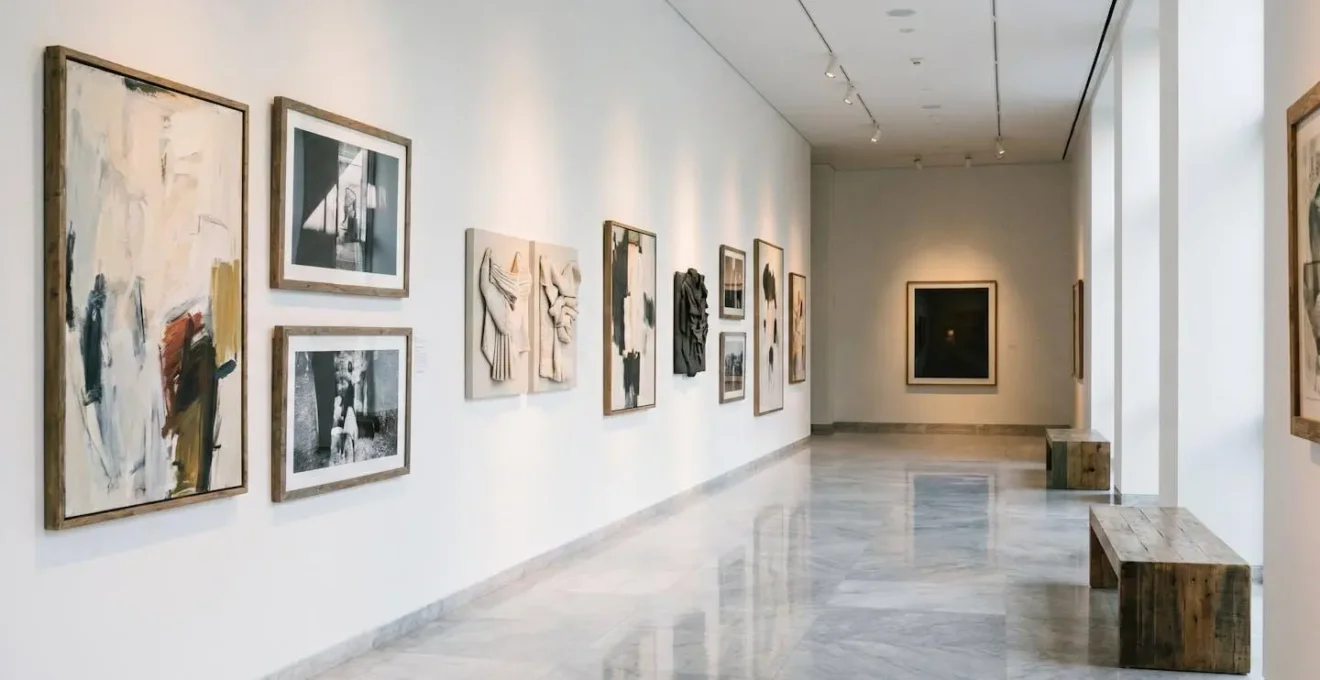
The distinction between a hotel with a genuine art collection and one with generic décor lies not in the fame of the artists, but in the curatorial intent behind the work.
- A true art hotel builds a cohesive narrative, often championing emerging artists and integrating art into the building’s very fabric.
- Evaluating a collection involves verifying provenance, assessing how art interacts with design, and testing the staff’s own knowledge and passion.
Recommendation: Shift your mindset from a passive guest to an active observer. Use the hotel itself as a gallery, applying a critical eye to uncover the stories told through its art and design.
For the discerning traveller, a hotel is more than a place to rest; it’s an extension of the cultural journey. Yet, the term “art hotel” is now so widespread it has become almost meaningless. Many properties hang a few colourful prints in the lobby and declare themselves a cultural destination. This creates a frustrating challenge for those who seek genuine artistic immersion: how do you separate the hotels that are true micro-galleries, with thoughtfully curated collections, from those that simply use art as expensive wallpaper?
The common advice—to look for famous names like Picasso or Warhol—is a red herring. In today’s hospitality landscape, the most exciting collections are often not about displaying established masters. The real measure of a hotel’s artistic soul is far more subtle. It’s found in the story the collection tells, the support it gives to a local creative ecosystem, and the way it’s woven into the guest experience.
But if the answer isn’t in a famous signature, where is it? The key is to stop looking at the art and start looking at the curation. It requires adopting a curator’s mindset to evaluate the intent, authenticity, and narrative behind what’s on the walls. This guide provides a framework to do just that, moving you beyond the surface-level appeal of lobby décor to uncover hotels that function as living, breathing cultural institutions.
This article will provide a comprehensive methodology for identifying and appreciating hotels with authentic art programs. We’ll explore the strategy behind their collections, how to gain deeper access, and the specific details that reveal a true commitment to culture.
Summary: A Discerning Traveller’s Guide to Hotel Art Collections
- Why Do Luxury Hotels Now Showcase Unknown Artists Instead of Masters?
- How to Arrange Private Art Tours of Hotel Collections in European Cities?
- Owned Art Collection or Temporary Gallery: Which Hotels Offer Deeper Experiences?
- The Provenance Problem: When Hotel Art Claims Don’t Match Reality
- When Do Art-Focused Hotels Host Artist Talks and Collection Viewings?
- Restored Historic Interiors or Modern Local Design: Which Expresses Place Better?
- How to Spot the Tiny Hotel Details That Reveal True Care?
- How to Find Hotels Whose Décor Reflects Local Design Heritage?
Why Do Luxury Hotels Now Showcase Unknown Artists Instead of Masters?
The traditional model of luxury, where a hotel’s prestige was measured by the auction value of a Picasso in the lobby, is fading. A significant shift is underway, driven by a new understanding of cultural value. Today, the most forward-thinking properties have realised that true luxury isn’t about passive ownership of expensive objects, but about active participation in cultural creation. The metric has changed; properties now compete on depth of cultural engagement rather than simple collection value.
This has led to a pivot towards showcasing emerging and local talent. By doing so, hotels transform from static museums into dynamic cultural hubs. They become patrons, providing a crucial platform for artists who are shaping the contemporary conversation. As one industry analysis notes, this strategy is about “supporting emerging and local talent…[to] enhance the immersive hotel experience, while introducing art to a broader audience.” The hotel becomes part of the art world’s ecosystem, not just a consumer of its blue-chip products.
This approach is exemplified by hotels with artist residency programs, such as those at Ace Hotel and Villa Lena. These programs bring working artists directly into the hotel space, allowing guests to witness and sometimes participate in the creative process. The focus shifts from the finished product to the ongoing dialogue of creation, offering a reason to return that transcends simple accommodation. The hotel itself becomes a producer of culture, not merely a collector.
How to Arrange Private Art Tours of Hotel Collections in European Cities?
Unlocking the stories behind a hotel’s art collection often requires moving beyond a casual walk-through. For significant collections, especially in cultural capitals across Europe, arranging a private or expert-led tour can transform your stay. The standard concierge may only have superficial knowledge; the key is to strategically access the curatorial expertise that shaped the collection. This means doing some homework before you even arrive.
The goal is to connect with the individual who holds the narrative—the curator, art director, or historian. These experts can provide unparalleled insight into the works, from the artist’s intention to the piece’s role in the hotel’s broader story. A guided viewing with the right person elevates the art from decoration to a deeply engaging cultural experience.
Accessing this level of engagement is a deliberate process. By targeting hotels with dedicated art staff and aligning your visit with key cultural events, you can position yourself to experience the collection on a much deeper level. Below are several strategies to secure a more meaningful interaction with a hotel’s art program.
- Pre-Arrival Research: Identify hotels with dedicated art curators or historians on staff. Properties like The Fife Arms in Scotland, which employs full-time art historians, signal a deep commitment that goes beyond decoration.
- Curator Contact Route: Bypass standard concierge offerings. Search the hotel’s press releases or “Art Program” web pages to find the names of art directors or external curators, then contact them directly to request an expert-led tour.
- Event-Timing Strategy: Align your visit with major art fairs like the Venice Biennale, Frieze London, or Art Basel. During these times, hotels often activate enhanced art programming and have curators on-site to engage a sophisticated clientele.
- Digital & Audio Access: For independent exploration, inquire about self-guided options. Many top-tier hotels, such as The Dolder Grand or The Merrion Dublin, offer QR code tours, dedicated art apps, or museum-class audio guides that provide in-depth commentary on their permanent collections.
Owned Art Collection or Temporary Gallery: Which Hotels Offer Deeper Experiences?
When evaluating a hotel’s art program, you’ll encounter two primary models: the permanent, owned collection and the rotating, temporary gallery. Each offers a different kind of experience, and understanding their strengths is key to aligning a hotel choice with your cultural interests. The owned collection functions like a private museum, offering a cohesive, timeless narrative that reflects the hotel’s long-term identity. In contrast, the temporary gallery model positions the hotel as a dynamic cultural anchor, constantly engaged in the real-time discourse of the contemporary art market.
Neither model is inherently superior; the “deeper” experience depends on what you seek. A permanent collection allows for deep staff training and storytelling that can evolve over years. A rotating gallery offers the excitement of discovery and the chance for direct engagement with living artists at opening events. To make an informed choice, it’s helpful to compare them across key criteria.
The following table breaks down the fundamental differences between these two curatorial approaches, based on an analysis of the hotel art market.
| Evaluation Criteria | Owned Collection Model | Temporary Gallery / Pop-Up Model |
|---|---|---|
| Curatorial Consistency | Cohesive narrative reflecting hotel identity across years | Rotating exhibitions every 2-4 months with evolving themes |
| Artist Caliber | Mix of established masters and selected emerging talents | Contemporary segment dominance with highest volume of available works |
| Guest Interaction Depth | Staff trained on permanent collection storytelling | Artist-in-residence programs and opening events for direct engagement |
| Cultural Positioning | Museum-like timeless prestige | Dynamic cultural anchor in real-time art market discourse |
| Commercial Dimension | Non-commercial display enhancing guest experience | Sale-enabled installations with gallery partnerships and digital platforms |
Ultimately, the model itself is less important than its execution. As one art consultancy’s analysis of hospitality curation astutely observes, the human element is paramount.
the ‘deeper’ experience is ultimately delivered by the staff. A hotel with a lesser-known owned collection but staff who can passionately narrate every piece offers a far deeper experience
– Industry expert observation, Art consultancy analysis of hospitality curation
The Provenance Problem: When Hotel Art Claims Don’t Match Reality
In the world of art, provenance—the documented history of an artwork’s ownership—is everything. It is the bedrock of authenticity and value. Unfortunately, in the less-regulated environment of hospitality, claims about a work’s origin or attribution can sometimes be dubious. The “Picasso” in the suite might be a licensed print, and the “emerging artist” might be a mass-producer of hotel décor. This issue is more widespread than many think; according to art authentication experts, up to 50% of artworks currently in circulation could be fraudulent or misattributed. For the discerning traveller, this “provenance problem” means a healthy dose of skepticism is required.
Distinguishing a piece of genuine art from a decorative object often comes down to scrutinizing the language used. A work “by” an artist is not the same as a work “attributed to,” “in the style of,” or “inspired by” them. These subtle distinctions can mean the difference between a museum-quality piece and a clever imitation. Forgery and misrepresentation are not just issues for high-end auction houses; they can also manifest in hotel collections where the desire to impress might outstrip the curatorial rigor. Therefore, developing a basic protocol for verifying a hotel’s art claims is an essential skill for any art-loving traveller.
Your Verification Checklist for Hotel Art Authenticity
- Digital Breadcrumb Trail: Check the artist’s official website or their representing gallery’s page. Legitimate hotel placements are typically listed in an artist’s official exhibition history or collections record.
- Provenance Documentation: Don’t be afraid to ask for it. Request to see documentation like sales receipts or gallery records. A list of previous owners without verifiable details is not valid provenance.
- Audit Attribution Language: Pay close attention to wording. “By Artist X” means direct authorship. “Attributed to” implies uncertainty. “In the style of” means it’s a copy. “Inspired by” is purely decorative.
- Check Signature & Edition: Look for signs of hotel-grade production. Is the work an unsigned part of a large edition? Is it a mass-produced licensed piece? Famous artists often have separate lines for the corporate hospitality market.
- Consult an Expert: For significant claims, an attribution is only as good as the expert who made it. An attribution is meaningless unless it comes from a recognized and respected authority on that specific artist.
When Do Art-Focused Hotels Host Artist Talks and Collection Viewings?
The most profound art experiences in a hotel setting often happen during programmed events, where the art becomes a catalyst for conversation and community. Artist talks, curator-led tours, and studio open days provide a level of access and understanding that a self-guided stroll cannot match. The key for travellers is knowing when these moments of deeper engagement are most likely to occur. Hotels with strong art programs don’t leave this to chance; they follow a strategic calendar designed to activate their collections and engage with culturally-minded guests.
This programming often follows predictable cycles tied to exhibition schedules, artist residencies, or major city-wide art fairs. By aligning your travel dates with these cycles, you can significantly increase your chances of participating in these exclusive events. For example, the most intimate and high-level events are often scheduled during a destination’s “shoulder season” as a deliberate strategy to attract high-value cultural travellers when the property isn’t saturated with tourists. Subscribing to a hotel’s dedicated “Art” or “Culture” newsletter is the best way to get advance notice of these opportunities.
Case Study: The Alfond Inn’s Consistent Public Engagement
The Alfond Inn in Winter Park, Florida, provides an exemplary model of structured public art engagement. In partnership with the Rollins Museum of Art, the hotel offers guided tours of its collection led by museum staff. These tours are held on a predictable schedule—every first Wednesday of the month at a set time—and are paired with social incentives like happy hour specials. This consistent, accessible monthly cadence allows both locals and travellers to plan visits around guaranteed curatorial access, demonstrating how a hotel can democratize its collection through reliable and thoughtful scheduling.
Understanding these patterns allows you to time your visit for maximum cultural benefit. Key opportunities include:
- Exhibition Openings: Hotels with temporary galleries typically host opening and closing events every 2-4 months.
- Residency Culminations: Properties with artist-in-residence programs, like Fogo Island Inn or UXUA Casa Hotel, often host talks and open studios near the end of each artist’s stay.
- Art Fair Alignment: During events like the Venice Biennale or Miami Art Week, art-focused hotels ramp up their programming with on-site curators and high-level tours.
- Institutional Partnerships: Hotels that partner with local museums or universities maintain a regular schedule of high-quality cultural events that are often open to guests.
Restored Historic Interiors or Modern Local Design: Which Expresses Place Better?
A hotel’s design is a powerful narrator of place, but what tells a more authentic story: the faithful restoration of a historic interior or a bold expression of contemporary local design? This question presents a false dichotomy. The most compelling and memorable hotel interiors are often not an “either/or” but a “both/and.” They create what can be called a “dialogic interior”—a space where modern elements enter into a direct and intentional conversation with historic architecture.
This approach avoids creating a pastiche of the past or a generic modern space untethered from its location. Instead, it layers time, allowing the building’s history and the region’s contemporary creative energy to coexist and enrich one another. As one description of the Althoff Grandhotel Schloss Bensberg notes, the ideal is “juxtaposing splendid contemporary art with baroque elements,” weaving “old and new with celebratory finesse.” This juxtaposition creates a dynamic tension that is far more expressive of a place’s living culture than a purely historic or purely modern approach.
Case Study: Villa Copenhagen and the Dialogic Interior
Villa Copenhagen, located in Copenhagen’s former Central Post & Telegraph Head Office from 1912, perfectly exemplifies this concept. Instead of erasing the building’s past, the design preserves gorgeous historic details—like original window accents—within its 390 guestrooms. These restored elements are then placed in dialogue with contemporary Nordic design and the city’s finest private art collection of contemporary works. The result is not a competition between past and present, but a conversation. This intentional layering creates a space that expresses the “place” of Copenhagen as a city that honours its history while being a global leader in modern design.
When you encounter such a space, you are experiencing a more complex and honest form of local identity. The building’s bones tell you where it has been, while the contemporary art and design tell you where its culture is going. This dialogue is the true mark of a design that deeply understands and reflects its heritage.
Key Takeaways
- True hotel art is defined by curatorial intent and narrative, not just the fame of the artists.
- Evaluating a hotel’s art program requires active investigation into provenance, staff knowledge, and the authenticity of its connection to local heritage.
- The most profound experiences often come from a dialogue between historic architecture and contemporary art, creating a layered sense of place.
How to Spot the Tiny Hotel Details That Reveal True Care?
The grand gestures—a monumental sculpture in the lobby or a famous painting in the restaurant—are easy to notice. But the true depth of a hotel’s commitment to art and design is often revealed in the smallest, most overlooked details. This is where curatorial intent bleeds into every aspect of the guest experience. As art advisors from MeSo Ventures state, “Art isn’t just decoration. It creates emotion…When done right, it also supports the story behind the space and reflects a hotel’s brand.” A hotel that truly understands this will not stop at the lobby.
This philosophy manifests in what could be called pervasive curatorial care. It’s a holistic approach where the principles of quality, narrative, and intentionality are applied universally, from the most public spaces to the most private touchpoints. Learning to spot these micro-level indicators is like learning to read the secret language of a hotel, allowing you to gauge its true character beyond the marketing brochure. It requires you to look closer, to touch, and to ask questions in places others might not think to look.
Audit Checklist: The Micro-Indicators of Genuine Curatorial Care
- The Forgotten Spaces Test: Inspect the art in hallways, stairwells, and even public restrooms. High-quality, original art in these unexpected places signals a pervasive commitment, not just surface-level decoration for primary guest areas.
- Staff Narrative Capability: Ask a non-concierge staff member—like a bartender or bellhop—about a nearby art piece. In hotels with true cultural DNA, the entire team is trained and empowered to share stories about their environment.
- Haptic Detail Examination: Focus on the tactile experience. Note the weight and material of door handles, the satisfying click of a light switch, or the paper stock of a menu. Hotels obsessed with design extend their care to these haptic touchpoints.
- Ephemera Cohesion Analysis: Look at the graphic design on the key card holder, the ‘Do Not Disturb’ sign, and the in-room stationery. Does the typography, paper quality, and design language cohere with the hotel’s grand vision?
- Intentional Art Placement: Observe *how* artworks are hung. Are they positioned for optimal viewing angles and lighting, creating conversational moments? Or are they simply hung to fill a blank wall? This reveals the difference between curation and decoration.
These small details, when taken together, paint a powerful picture of a hotel’s soul. They are the undeniable evidence of a team that cares deeply not just about how the place looks, but how it feels, functions, and tells its story.
How to Find Hotels Whose Décor Reflects Local Design Heritage?
The ultimate challenge is to proactively find these rare hotels where the design is a genuine reflection of local heritage, not a generic interpretation. Standard searches for “design hotel” often yield properties that follow global trends rather than expressing a unique sense of place. To find authenticity, you must reverse-engineer your search process, starting with the sources of local design culture itself, rather than with travel portals.
This means becoming a detective of design heritage. Instead of looking for hotels, look for the architects, designers, artisans, and materials that define a region’s aesthetic. By tracing these elements back to the hotels that commission and celebrate them, you can uncover properties with an unimpeachable design pedigree. This approach bypasses marketing hype and connects you directly with spaces that are deeply and authentically rooted in their environment.
Case Study: Lisbon Locke’s Material-Driven Heritage
Lisbon Locke is a prime example of a hotel discovered through this method. Its design is rooted in the material and craft heritage of its location. Housed in a 17th-century convent, the hotel commissioned Peruvian textile artist Ana Teresa Barboza to create site-specific works for its 370 apartments. Critically, Barboza’s pieces use yarns dyed to match Lisbon’s unique color palette and geography. This demonstrates how curatorial intent can connect contemporary craft with classic Portuguese design through material, creating an authenticity that is felt viscerally. This commissioning evidence is a powerful signal of a hotel’s deep engagement with local heritage.
This reverse-engineering strategy requires a more investigative mindset, but it is far more rewarding. Here are several effective techniques:
- Architect-First Discovery: Begin by researching celebrated local architects and interior designers in your target city. Then, search their professional portfolios for hotel projects.
- Material-Specific Keyword Method: Search using the names of specific local materials instead of vague styles. For example, use “hotel azulejos Lisbon” or “hotel local stone Provence” to find properties built with regional materials.
- Local Design Media Consultation: Identify the city’s primary architecture and design magazines or blogs. Their hotel reviews will offer a more critical assessment of local authenticity than general travel publications.
- Makers List Verification: Look for “makers lists” on hotel websites or in their press materials. Hotels that credit their local artisans, carpenters, and textile artists are signaling a commitment to community and craft.
Ultimately, a hotel’s art collection is a reflection of its philosophy. By learning to read its collection with a discerning eye—evaluating its curatorial intent, verifying its claims, and observing its integration into the very fabric of the hotel—you transform your role from a mere guest into a knowledgeable patron. This framework empowers you to find those exceptional properties that don’t just house art, but live it.