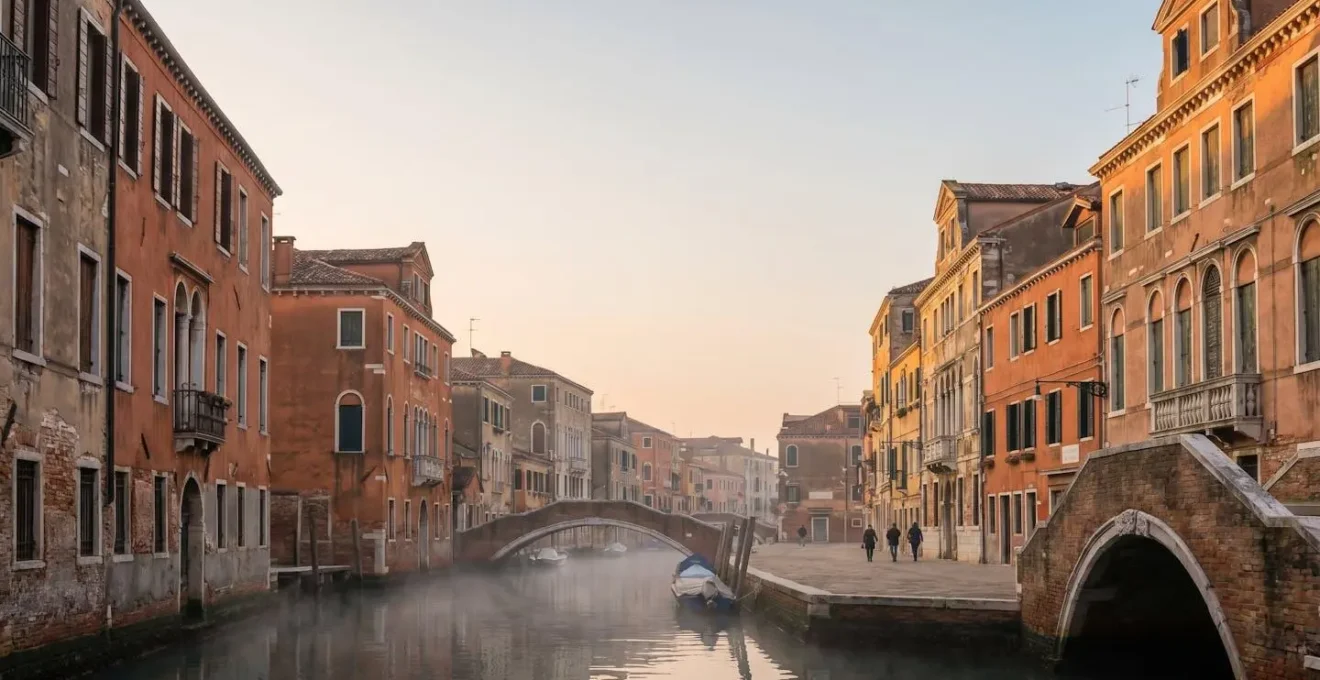
Choosing a hotel in Venice is not about finding a dot on a map; it’s about deciding which version of the city you want to experience—the crowded theme park or the living, breathing heart.
- The most famous areas, like San Marco, become overwhelmingly crowded by mid-morning, losing all romantic intimacy.
- Authentic Venice reveals itself in residential quarters like Cannaregio or Castello, through local routines and sensory details.
Recommendation: Prioritise the neighbourhood’s ‘sensory signature’—its sounds, pace, and daily life—over its proximity to a major landmark for a truly memorable stay.
Couples arrive in Venice seeking romance, magic, and a connection to centuries of history. They leave with photos of crowds, overpriced coffee, and the nagging feeling they missed something. As a hospitality consultant who has lived my entire life in the quiet canals of Cannaregio, I see this happen every day. The mistake is always the same: they choose a hotel, but they don’t choose their Venice. They look at a map for proximity to St. Mark’s Square, not understanding that the real map of Venice is one of sound, light, and rhythm.
The common advice suggests you pick one of the six sestieri (districts). But this is a shallow approach. It doesn’t explain the crushing reality of the tourist-tide line, that invisible border you cross where the sound of Italian chatter is replaced by the rumble of a thousand trolley bags. It doesn’t tell you that the most profound romantic moments aren’t found in front of a monument, but in a foggy morning on an empty campo, or sharing cicchetti at a bacaro where the owner knows everyone’s name. This guide is different. It’s not about listing hotels; it’s about decoding the city’s sensory signature.
Forget the generic guides. We will explore why the heart of tourist Venice can feel hollow after breakfast and how to escape it. We will weigh the soul of a 15th-century palazzo against a modern design, and I’ll reveal the local secrets that save you from tourist traps. This is about equipping you to make a choice that goes beyond a room, a choice that ensures the Venice you discover is the authentic, enchanting city we locals cherish.
This article will guide you through the critical questions you should be asking, transforming your search from a logistical headache into the first romantic step of your journey. The following sections break down the real choices that will define your Venetian experience.
Summary: An Insider’s Guide to Finding Authentic Venice
- Why Does San Marco Feel Less Romantic After 9am?
- How to Reach Your Venice Hotel From the Airport Without Overpaying?
- 15th-Century Palazzo or Contemporary Conversion: Which Feels More Venetian?
- The Hotel Breakfast Trap Costing Venice Visitors £175 Per Week
- When Does Venice Offer Romance Without the Cruise Ship Crowds?
- Tourist District or Residential Quarter: Where Do Real Treasures Hide?
- Where in Europe Do Hotels Still Furnish With Authentic 18th-Century Pieces?
- Where to Stay in Prague to Wake Up to Gothic Splendour?
Why Does San Marco Feel Less Romantic After 9am?
The postcard image of Venice is St. Mark’s Square. It is breathtaking, a vast marble drawing-room open to the sky. For a few fleeting moments at dawn, it is yours. But after 9 a.m., the magic shatters. The tourist-tide line doesn’t just approach; it crashes over the entire district with the force of a tsunami. This isn’t an exaggeration; it’s a daily reality. The area becomes a bottleneck of humanity, a place to transit through, not to linger in. To choose a hotel here is to choose to wake up in the epicentre of an amusement park just as the gates open.
The numbers are staggering. On peak days, the city swells with an influx that can feel overwhelming, with Venice tourism data showing up to 60,000 tourists flooding the main arteries. The sensory signature of San Marco post-9am is not the chime of bells or the lapping of water; it’s the confused shouting of tour groups, the incessant click of selfie sticks, and the weary rumble of luggage wheels over stone. As a local guide, Alessandro, puts it with frankness that we Venetians appreciate:
San Marco is by far the most touristy part of town and somewhere that I would never consider basing myself. While undeniably beautiful, this neighborhood has been almost entirely transformed by tourism.
– Alessandro (Local Venice Guide), Go Ask A Local – Venice Neighborhood Guide
The romance you seek is one of intimacy and discovery. That is simply not possible when you are shoulder-to-shoulder with thousands of others following the same well-worn path from the Rialto to the Accademia. The real Venice requires space to breathe, and in San Marco during the day, there is none.
How to Reach Your Venice Hotel From the Airport Without Overpaying?
Your Venetian romance begins the moment you leave Marco Polo Airport. Will it be a grand, cinematic arrival across the lagoon, or a stressful, confusing slog with your luggage? Your choice of transport is your first taste of the city, and it sets the tone for your entire stay. It’s easy to get it wrong and overpay for a subpar experience. The key is to match the transport to the experience you desire—and your budget—rather than just grabbing the first option you see.
The private water taxi is the James Bond arrival: sleek, fast, and delivering you directly to the water entrance of your hotel (or the nearest canal). It’s the most expensive, but for a special occasion or a group, it offers unparalleled convenience and a truly unforgettable first impression. On the other end is the public bus and vaporetto combination; it’s economical but requires multiple changes, navigating crowds, and—crucially—hauling your luggage over countless bridges. This is often where the romantic dream meets a harsh, sweaty reality. A balanced approach often provides the best value.
To help you decide, here is a breakdown of the primary options. This comparative analysis from Venice Travel Tips illustrates the trade-offs between cost, time, and the sheer magic of the experience.
| Transport Option | Cost per Person/Group | Journey Time | Privacy Level | Luggage Convenience | Cinematic Feel |
|---|---|---|---|---|---|
| Private Water Taxi | €140-€160 (up to 4 people) | 20-25 minutes | High – Private | Door-to-door service | Maximum – Grand Canal arrival |
| Shared Water Taxi | €30-40 per person | 25-35 minutes | Medium – 6 people max | Door-to-door service | High – Canal entry |
| Alilaguna Water Bus | €18 per person | 50-70 minutes | Low – 50-60 people | Multiple stops, bridge walking | Medium – Lagoon views |
| Land Bus + Vaporetto | €10-15 per person | 60-90 minutes | Low – Public transport | Requires bridge crossings | Low – No water arrival |
Consider the shared water taxi as a strong contender. It offers a similar door-to-door, on-water experience to a private taxi but at a fraction of the cost, shared with just a few other couples. It’s the smart romantic’s choice.
15th-Century Palazzo or Contemporary Conversion: Which Feels More Venetian?
The city’s hotel offerings present a fundamental choice of identity: do you sleep within the layers of history or in a space that comments on it? Do you want a 15th-century palazzo, with its Murano glass chandeliers, frescoed ceilings, and perhaps a slightly temperamental plumbing system? Or do you prefer a contemporary conversion, with minimalist design, sharp lines, and all the modern comforts, set within an ancient shell? This isn’t just about aesthetics; it’s about the sensory signature of your stay. The answer to “which feels more Venetian” is, paradoxically, “both.” But they offer entirely different versions of Venice.
The historic palazzo connects you to a Venice of Doges and merchants. It’s an immersive, theatrical experience. You might wake in a room with silk-damask walls, walk on terrazzo floors laid down centuries ago, and look out of a gothic-arched window onto the same canal view a noble family enjoyed. This is living history. It is opulent, sometimes faded, and deeply atmospheric. The trade-off can be smaller rooms or quirks born of protecting a historic structure. The key is authenticity; the best palazzi feel like grand homes, not museums.
A contemporary conversion, on the other hand, offers a different kind of dialogue with the city. These hotels, often designed by renowned architects, use modern materials like glass, steel, and polished concrete to contrast with the ancient brick and stone. The feeling is less about historical immersion and more about a curated, artistic appreciation of Venice. They provide a calm, clean-lined refuge from the city’s rich visual density. For some, this sharp, quiet minimalism is the ultimate luxury. It’s a choice between sleeping inside the story or sleeping in a gallery that observes it.
The Hotel Breakfast Trap Costing Venice Visitors £175 Per Week
One of the most common and costly mistakes visitors make is opting for the hotel breakfast. It seems convenient, an easy start to the day. But in Venice, it’s often a trap. For an average of €20-€25 per person, you are typically served a generic, international buffet of sad scrambled eggs, mediocre pastries, and machine coffee. For a couple, that can easily add up to €250, or nearly £175, over a five-day trip—money that could be spent on truly memorable Venetian experiences.
The hotel breakfast is not how Venice works. It isolates you from the city’s morning rhythm. The authentic Venetian breakfast is a social ritual, and it happens standing up, at the zinc bar of a local *pasticceria* or *bar*. It is a quick, elegant, and inexpensive affair. For under €5, you get a perfect cappuccino—made by a barista who knows their craft—and a freshly baked *cornetto* (croissant), perhaps filled with pistachio cream or apricot jam. You are in and out in ten minutes, but in that time, you have participated in the life of the city.
You’ll stand shoulder-to-shoulder with locals on their way to work, hear the rapid-fire Italian gossip, and feel the energy of a neighbourhood waking up. This is the real sensory signature of a Venetian morning. By skipping the soulless hotel buffet, you not only save a significant amount of money, but you also gain a priceless daily connection to the authentic fabric of the city. Find a local bar near your hotel on the first day, and by the third, the barista will likely have your order ready as you walk in. That feeling of belonging, however brief, is worth more than any buffet.
When Does Venice Offer Romance Without the Cruise Ship Crowds?
The greatest luxury in modern Venice is not gold leaf or Murano glass; it is empty space and silence. Finding this luxury is a matter of timing. The city’s character changes dramatically with the seasons, dictated largely by one single factor: the cruise ship schedule. The high season, from late spring to early autumn, coincides with the peak cruise calendar, turning the city’s main thoroughfares into a relentless human river. True romance requires a quieter stage.
The data is stark. An analysis of cruise traffic reveals that a staggering 87% of cruise arrivals occur from May to October. This is the period to avoid if you seek intimacy. The secret is to travel in the “shoulder seasons” or the heart of winter. These are the times when the tourist-tide recedes, leaving the city to its residents and a handful of savvy visitors. The atmosphere transforms. The light becomes softer, the air crisper, and the sounds of the city return—the lapping of water, the distant chime of a church bell, the echo of footsteps in a narrow alley.
The off-season offers distinct moods. As ArtViva’s travel analysis points out, early November and late February are “sweet spots” with mild weather and minimal crowds. December offers a magical, festive atmosphere with canals adorned for Christmas, a time when the city feels like a private, sparkling jewel. This is Venice at its most atmospheric, wrapped in mist and quiet contemplation. This is the Venice for lovers. You trade the guarantee of sun for the guarantee of soul. It’s a bargain every true romantic should be willing to make.
Tourist District or Residential Quarter: Where Do Real Treasures Hide?
This is the most important decision you will make. It is the choice between observation and participation. Do you stay in a “tourist” district like San Marco or San Polo, where the city feels like a beautiful but static museum exhibit? Or do you choose a residential quarter like my own beloved Cannaregio, or the sprawling, authentic Castello, and step into the living city? The real treasures of Venice are not monuments you can photograph, but moments you must experience.
As the local experts at Tour Leader Venice rightly point out, “Cannaregio is the city’s most lived-in district, where locals still shop at the market and greet each other by name.” Here, the treasures are the scent of a bakery at 6 a.m., the sight of laundry lines strung between buildings, the sound of children playing football in a quiet campo, and the unbeatable cicchetti found in the bacari along the Fondamenta della Misericordia. This is the sensory signature of real life.
Similarly, the Castello district, as described in a WheretoNau guide, offers an immersion into Venetian “slow-living.” It is here you can witness daily life unfold authentically. The case study highlights the experience of seeing ‘nonnas’ lowering baskets from windows to collect groceries—a small, everyday scene that is more profoundly Venetian than any gondola ride. These neighbourhoods are not devoid of beauty; they contain hidden gardens, quiet canals, and small artisan shops. But their primary function is as a home, not a tourist attraction. By staying here, you become a temporary resident, a quiet observer of a life that has persisted for centuries, and the treasures you find will be the memories of those small, authentic moments.
Key Takeaways
- Choosing a hotel in Venice is an emotional and sensory choice, not just a logistical one. The neighbourhood’s ‘feel’ is more important than its proximity to a landmark.
- Avoid the “hotel breakfast trap.” Embrace the local morning ritual of a cappuccino and cornetto at a bar to save money and experience authentic Venetian life.
- Travel during the shoulder seasons (Nov, Feb-Mar) or winter (Dec) to escape the overwhelming cruise ship crowds and experience the city’s true, atmospheric romance.
Where in Europe Do Hotels Still Furnish With Authentic 18th-Century Pieces?
For some romantics, the allure of Venice is tied to a specific dream: sleeping in a room that feels untouched by time, surrounded by genuine history. This desire for authenticity—for real 18th-century furnishings, not reproductions—is a niche but passionate quest. Venice is one of the premier destinations for this, but it’s part of a “Triangle of Authenticity” in Europe, alongside France’s Loire Valley and the Schlosshotels of Austria and Germany. What makes Venice unique within this triangle is its specific Rococo style and its preservation through noble family heritage.
The best Venetian palazzo hotels function as living homes curated by families, not commercial properties staged by designers. As a case study by The Hotel Guru notes, properties like the Londra Palace Venezia house genuine period pieces because they are part of the building’s soul and history. The authenticity comes from this unbroken chain of ownership and curation. But how can a visitor distinguish true antiques from clever fakes? It requires a bit of detective work and an eye for the details that betray time. An authentic piece tells its story through its imperfections: the patina of age, the hand-cut joints, the irregular wear patterns from centuries of use.
This checklist can help you train your eye to spot the real treasures, turning your hotel stay into a fascinating historical investigation.
Action plan: How to Identify Period-Authentic vs Reproduction Furniture
- Examine joinery: Look for hand-cut dovetail joints, wooden pegs, and slight irregularities. Machine-perfect joints signal a modern reproduction.
- Check for patina: Observe wear patterns. Genuine antiques have darkened areas where hands have rested and uneven fading from sunlight over centuries.
- Investigate provenance: Research the hotel’s history. Properties still owned by the original noble families often feature heirloom pieces passed down through generations.
- Note wood characteristics: Period pieces were made from old-growth timber, which has a tighter, more irregular grain pattern than modern, farmed lumber.
- Assess the context: Hotels converted from historic palazzi or châteaux that explicitly market their heritage are more likely to have retained original furnishings.
Choosing a hotel for its authentic furnishings is the ultimate commitment to an immersive historical experience. It’s choosing to sleep not just in Venice, but in a specific chapter of its opulent past.
Where to Stay in Prague to Wake Up to Gothic Splendour?
Sometimes, to truly understand what you want from Venice, it helps to consider what you don’t. I have had clients who, after much discussion, realise the romantic fantasy in their head is not Venetian at all. It is Gothic, mystical, and vertical. They are, in fact, dreaming of Prague. Choosing a hotel is about matching the architecture to your emotional landscape. So, before you book that Venetian hotel, ask yourself: is your heart set on shimmering lagoon light, or the dark fairytale silhouette of a castle on a hill?
To wake up to Gothic splendour, you would go to Prague’s Malá Strana (Lesser Town). As a case study by Earth Trekkers highlights, a hotel there offers views of St. Vitus Cathedral’s spires piercing the morning mist or the stone arches of Charles Bridge. This aesthetic is fundamentally different from ours. Prague’s splendour is imperial, terrestrial, and vertical—spires reaching for the heavens. It evokes a sense of dark romance, alchemy, and ancient forests. It is a romance of solid ground, of stone and soil.
Venice’s splendour is mercantile, aquatic, and horizontal. Our palaces are built on water, their beauty completed by their own reflection. Our romance is one of shimmering light, masks, and the sea. One is vertical, the other is horizontal. One is a fairytale of mountains and towers; the other is a dream of the lagoon. There is no “better” romanticism, but they are profoundly different. Knowing which one resonates with your soul is the key to not just a good vacation, but a trip that feels like coming home to a place you’ve only ever seen in your dreams.
So, this seemingly strange question is the final, crucial filter. By understanding the allure of a place like Prague, you can affirm with certainty that it is truly Venice’s unique, horizontal, water-bound magic that you seek.
Now that you can distinguish the sensory signature of the city you truly desire, the next step is to choose the neighbourhood that will become the heart of your personal Venetian story. This is how you move from being a tourist to being a temporary Venetian.