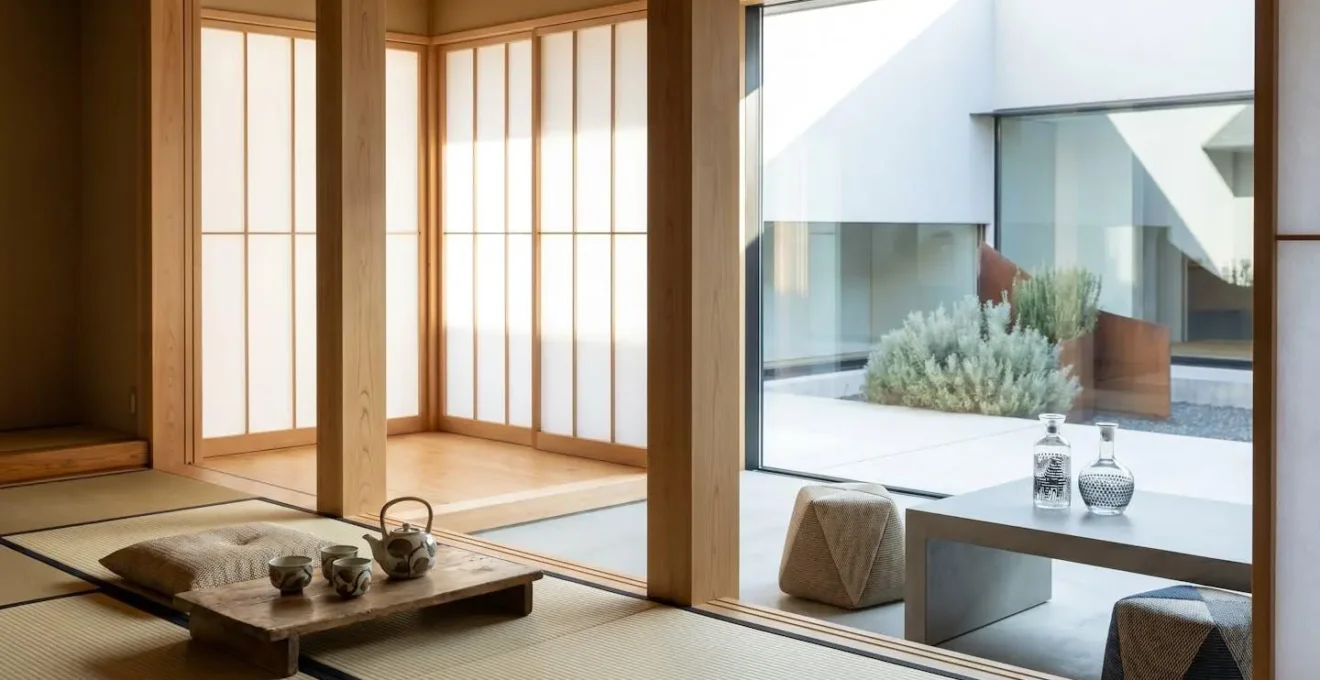
Choosing between a ryokan and a hotel in Kyoto isn’t about tradition vs. comfort—it’s about aligning your accommodation with your desired travel rhythm.
- Ryokans offer “structured serenity” with fixed schedules that immerse you in Japanese hospitality, while hotels provide the flexibility and freedom Western travelers are accustomed to.
- Your choice of neighborhood is a critical time-budget decision; a poor location can cost you hours in daily transit, regardless of your hotel type.
Recommendation: Instead of asking “which is better?”, first define the pace and purpose of your trip. Then, select the accommodation type and location that best serves those goals.
For the first-time Western traveler, Kyoto presents a beautiful dilemma. The city, a seamless blend of ancient tradition and modern life, is mirrored in its accommodation choices. On one hand, there is the allure of the ryokan, a traditional Japanese inn promising deep cultural immersion. On the other, the familiar comfort of a Western-style hotel offers a predictable and flexible base for exploration. The internet is filled with advice that frames this as a simple trade-off: authentic culture versus reliable comfort. You’ll read about futons, tatami mats, and intricate kaiseki dinners, often positioned as challenges to be endured for the sake of experience.
This perspective, however, misses the point entirely. The most common advice focuses on the “what”—the physical objects and services—but fails to explain the “why.” Why are meal times fixed? Why are there so many rules about shoes? Why does sleeping on the floor feel so alien at first? Understanding these elements is key. The real distinction between a ryokan and a hotel is not in their amenities, but in the fundamental travel rhythm they impose upon your stay. A ryokan offers a structured, immersive pace, while a hotel provides an unstructured, independent one.
But if the core of the choice is about rhythm, where does that leave the generic advice? The true key to an unforgettable Kyoto trip lies in moving beyond the culture-versus-comfort trap. The crucial question is not “Should I stay in a ryokan or a hotel?” but rather, “What kind of experience am I seeking, and which accommodation’s structure will best facilitate it?” This guide will deconstruct the common misconceptions and provide a new framework for your decision. We will explore the realities of ryokan life, the strategic importance of location, and how to find genuine cultural connection, even in a modern hotel. By the end, you will be equipped to choose an accommodation that doesn’t just house you, but actively enhances your entire Kyoto journey.
To help you navigate this important decision, this article breaks down the key factors to consider. We will cover everything from sleeping arrangements and etiquette to location strategy and seasonal beauty, providing a comprehensive framework for choosing your ideal Kyoto stay.
Table of Contents: A Guide to Choosing Your Ideal Kyoto Accommodation
- Why Do 40% of First-Time Ryokan Guests Struggle With Tatami Sleeping?
- How to Behave in a Traditional Kyoto Ryokan: The 7 Unspoken Rules?
- Hybrid Comfort or Full Tradition: Which Kyoto Accommodation Suits You?
- The Kyoto Hotel Location Error That Costs 10+ Hours Per Trip
- When Do Kyoto’s Garden Hotels Offer Peak Seasonal Beauty?
- Why Do International Hotel Chains Feel Identical Regardless of City?
- Why Do Luxury Hotels Ignore Light-Blocking and Noise Issues?
- How to Choose Hotels That Connect You to Neighbourhood Culture?
Why Do 40% of First-Time Ryokan Guests Struggle With Tatami Sleeping?
The most cited hesitation for Western travelers considering a ryokan is the sleeping arrangement: a futon on a tatami mat floor. The image can conjure thoughts of camping or discomfort, a stark contrast to the plush, elevated beds of Western hotels. While the “40% struggle” figure is anecdotal, it reflects a genuine apprehension. However, this fear often stems from a misunderstanding of what the experience entails. A high-quality ryokan futon is a thick, cushioned mattress, far from a simple sleeping bag. The struggle isn’t usually about a lack of softness, but about the unfamiliarity of sleeping at floor level and the firmness of the support.
The experience is less about hardship and more about a different philosophy of rest. As one travelogue on the ryokan experience notes, staff typically lay out the futons for you during dinner, so the room transforms from a living space to a bedroom without any effort on your part. For many, the initial night is an adjustment. Your body, accustomed to the give of a spring mattress, must adapt to the supportive surface of the futon. Yet, many guests report that after this initial adaptation, they experience a surprisingly deep and restful sleep. It’s a physical recalibration that often becomes more comfortable over subsequent nights.
Ultimately, the question of tatami sleeping is one of personal preference and physical needs. It’s an investment in an authentic experience, and with ryokans often costing from 15,000 to 30,000 yen per person per night, it’s a significant one. For those with back problems or mobility issues, it may be a genuine barrier. But for most, the “struggle” is a temporary mental and physical adjustment that quickly gives way to a unique and memorable aspect of Japanese hospitality. It’s not about enduring discomfort, but about embracing a different form of structured serenity.
How to Behave in a Traditional Kyoto Ryokan: The 7 Unspoken Rules?
Beyond the futon, what truly defines the ryokan experience is its intricate set of behavioral codes—the “software” of Japanese hospitality. These are not arbitrary rules designed to inconvenience guests; they are spatial rituals rooted in centuries-old concepts of purity, respect, and the seamless transition between different environments. Mastering them is key to showing respect and fully immersing yourself in the tranquil atmosphere. The most fundamental rule begins before you even step inside: removing your shoes at the *genkan* (the entryway).
As the image above illustrates, the genkan is a clear threshold. Here, you exchange your outdoor shoes for indoor slippers. This act symbolizes leaving the outside world and its impurities behind. However, these slippers have their own rules: they are never to be worn on the delicate tatami mats, which are reserved for socks or bare feet only. This respect for materials and spaces is a core ten্রেট of the ryokan ethos. To help navigate this, here are the essential etiquette points to remember.
- Rule 1: Arrive Before 6 PM. If your stay includes the signature *kaiseki* dinner, punctuality is paramount. Chefs prepare these multi-course meals to be served at their absolute peak of freshness and quality. Arriving late is considered disrespectful to their craft.
- Rule 2: Master the Shoe & Slipper System. After leaving your outdoor shoes at the genkan, wear the provided slippers in all hallway areas. Remove them before stepping onto any tatami mat.
- Rule 3: Use the Toilet Slippers. You will find a separate pair of slippers at the restroom entrance. These are to be used exclusively inside the bathroom and swapped back for your hallway slippers upon exiting. Never wear toilet slippers outside the restroom.
- Rule 4: Wear the Yukata Correctly. The *yukata*, a casual cotton kimono, is for lounging in your room, going to the bath, and sometimes even for dinner. For both men and women, the rule is to wrap the left side over the right side. The reverse is used for dressing the deceased for burial.
- Rule 5: Respect Meal Timing. Dinner is often served around 6 PM, and breakfast at a set time as well. Be seated and ready when staff arrive. The experience is a performance, and your punctuality is part of it.
- Rule 6: No Tipping is Required. Service is included in the high price of a ryokan stay. Tipping is not customary in Japan and can sometimes cause awkwardness. Excellent service is the standard, not an exception to be rewarded.
- Rule 7: Maintain a Quiet Atmosphere. Ryokans are sanctuaries of peace. Walls can be thin (sometimes traditional paper *shoji* screens), so keep your voice low, especially after 10 PM, to respect the tranquility for all guests.
Hybrid Comfort or Full Tradition: Which Kyoto Accommodation Suits You?
The choice is not a binary between a spartan traditional inn and a generic global hotel. Kyoto’s accommodation landscape is a rich spectrum, offering various blends of Japanese aesthetics and Western comfort. Understanding this spectrum is the key to finding your perfect fit. The “Modern Ryokan” or “Japanese Boutique Hotel” categories, for example, have emerged specifically to cater to travelers who desire cultural immersion without sacrificing familiar comforts like a Western bed or a flexible schedule. These hybrids offer a fantastic middle ground.
Conversely, for those seeking ultimate privacy and freedom, renting a *machiya* (a traditional wooden townhouse) provides a “home away from home.” This option gives you the architectural atmosphere of old Kyoto with the autonomy to set your own schedule and self-cater, making it ideal for families or longer stays. At the other end, international hotel chains offer reliability, extensive amenities like gyms and pools, and the convenience of loyalty programs. This is often the best choice for business travelers or those on very short trips who prioritize logistical ease above all else. This is highlighted in a comparative analysis of Kyoto accommodations, which helps clarify the trade-offs.
The following table breaks down the main accommodation types in Kyoto, outlining their key features to help you align your choice with your travel style and priorities.
| Accommodation Type | Sleep Setup | Meals Included | Flexibility | Cultural Immersion | Best For |
|---|---|---|---|---|---|
| Traditional Ryokan | Futon on tatami | Kaiseki dinner & breakfast | Fixed schedule (dinner 6-7pm) | Very High | Cultural experience seekers, 1-2 night stays |
| Modern Ryokan | Western beds on tatami | Often included | Moderate schedule | High | First-timers wanting comfort with tradition |
| Machiya Townhouse | Mix of futon & beds | Self-catering | Complete freedom | High | Privacy seekers, families, longer stays |
| Japanese Boutique Hotel | Western beds | Breakfast only | High freedom | Medium | Style-conscious travelers, convenience |
| International Hotel | Western beds | Optional | Complete freedom | Low to Medium | Business travelers, short stays, transport access |
The Kyoto Hotel Location Error That Costs 10+ Hours Per Trip
After deciding on your preferred accommodation *type*, the single most important decision you will make is its *location*. First-time visitors often underestimate Kyoto’s scale and the time it takes to travel between its dispersed sights. Choosing the wrong neighborhood can easily add 90 minutes to 2 hours of transit time to your daily schedule. Over a five-day trip, that’s 10+ hours spent on a bus or subway instead of exploring a temple or garden. This is why framing location as a time-budget is critical. As one travel guide notes, ‘Your location truly changes the pace and feel of your trip, namely, how much time you spend sightseeing versus commuting.’ The common mistake is to book a single hotel for the entire trip based on price or proximity to Kyoto Station alone.
Staying near Kyoto Station is perfect for short trips or if you plan many day trips, but it means you are a 30-45 minute journey from the historic atmosphere of Gion and the main temples of Higashiyama. Conversely, staying deep in Gion immerses you in beauty but can make your arrival, departure, and any travel outside the eastern part of the city logistically cumbersome. A strategic approach is essential to maximize your time.
To avoid this costly error, consider your trip’s length and priorities. Here is a strategy for selecting your neighborhood:
- Downtown Kawaramachi: The best all-rounder for first-timers. It’s central, with excellent transport links, vibrant dining, and is within walking distance of Gion. It balances convenience with atmosphere.
- Gion & Southern Higashiyama: Ideal for cultural immersion and romantic trips. You’ll wake up surrounded by preserved streets and teahouses, and key sights like Kiyomizu-dera are a short walk away. Best for travelers prioritizing atmosphere over transit convenience.
- Kyoto Station Area: The logistical champion. Perfect for stays under 3 days, travelers with heavy luggage, or those using Kyoto as a base for day trips (e.g., to Nara or Osaka) via the Shinkansen.
- The Split-Stay Strategy (4+ Days): This is the ultimate solution. Book 2 nights in a traditional ryokan in Higashiyama to soak in the culture, then move to a modern hotel in Downtown or near Kyoto Station for the remainder of your trip. This gives you the best of both worlds: deep immersion and logistical ease.
Avoid the “single-base fallacy.” Thinking strategically about where you stay, and even considering changing locations mid-trip, is the most powerful tool for reclaiming your precious vacation time.
When Do Kyoto’s Garden Hotels Offer Peak Seasonal Beauty?
Beyond comfort and location, some Kyoto accommodations offer a unique connection to nature that becomes an attraction in itself. A handful of luxury hotels and ryokans are built around historic Japanese gardens, designed to capture the fleeting beauty of each season. Choosing one of these properties, and timing your visit correctly, can elevate your stay from simple lodging to a profound aesthetic experience. The concept of appreciating seasonal change is deeply woven into Japanese culture, from *hanami* (cherry blossom viewing) in spring to *momijigari* (maple-gazing) in autumn.
A hotel with a significant garden allows you to experience this intimately, away from the crowds. The garden transforms throughout the year: vibrant cherry blossoms in late March/early April; deep, lush greens and the sound of cicadas in summer; a fiery explosion of reds and golds from mid-November to early December; and the serene, monochrome beauty of a potential snowscape in January or February. A stay in one of these hotels is a front-row seat to nature’s performance.
The experience is about more than just a pretty view. These gardens are meticulously designed landscapes, full of symbolism and history, meant to be contemplated from various viewpoints within the hotel—from your room, a lounge, or a restaurant. The tranquility they offer provides a valuable counterbalance to a busy day of sightseeing.
Case Study: The 800-Year-Old Garden at Four Seasons Kyoto
A prime example is the Four Seasons Hotel Kyoto, which is centered around Shakusui-en, an 800-year-old pond garden from the Heian Period. This 10,000-square-meter heritage site in Higashiyama offers guests a direct link to imperial history. Guests can participate in tea ceremonies in a traditional teahouse overlooking the pond or simply wander the paths, observing ancient stone arrangements that symbolize mythical islands. The garden’s dramatic seasonal shifts—from spring cherry blossoms to autumn maples reflected in the water—make the hotel itself a destination. This integration of landscape and hospitality provides a layer of experience that goes far beyond a typical luxury stay.
Why Do International Hotel Chains Feel Identical Regardless of City?
After the immersive, highly specific experience of a ryokan, the standardized environment of an international hotel chain can feel jarringly generic. You could be in Kyoto, Paris, or New York, and the lobby, room layout, and even the breakfast buffet might feel remarkably similar. This phenomenon isn’t an accident; it’s the core of their business model. Major hotel brands like Marriott, Hilton, or Hyatt thrive on predictability and standardization. Their goal is to provide a consistent, reliable product for their target audience—often business travelers and members of loyalty programs—who value knowing exactly what to expect, no matter where they are in the world.
This “brand standard” dictates everything from the type of mattress and the brand of toiletries to the IT infrastructure and staff training protocols. While this guarantees a certain level of quality and removes uncertainty, it often comes at the cost of local character. The hotel becomes a self-contained bubble, physically located in a city but culturally detached from it. While some chains are making efforts to incorporate local design elements, the underlying operational structure remains globalized. As one guide points out about the city’s ‘density and design — the city has hundreds of properties,’ Kyoto offers a wealth of alternatives to this model.
The contrast is particularly stark in a city like Kyoto, where so much of the magic lies in small, unique details. The identical feel of a global chain hotel can create a barrier to the very experiences many travelers come to seek. It prioritizes frictionless logistics over authentic connection, offering a product that is efficient but often soulless. This isn’t necessarily a bad thing—for a short business trip or a single-night layover, this predictability can be a significant asset. However, for a traveler seeking to experience the unique essence of Kyoto, it represents a missed opportunity for deeper engagement.
Why Do Luxury Hotels Ignore Light-Blocking and Noise Issues?
Whether you choose a ryokan steeped in tradition or a five-star international hotel, one factor can make or break your stay: sleep quality. It’s a surprising paradox that many accommodations, including luxury ones, often fail at this fundamental aspect of hospitality. In Kyoto, these issues can be particularly pronounced. Traditional ryokans, with their beautiful but thin paper *shoji* screens and non-refractive curtains, are not designed for modern expectations of a pitch-black room. The early summer sunrise (around 5 AM) can easily disrupt your sleep.
Modern hotels are not immune either. A room facing a major thoroughfare like Kawaramachi-dori can be subject to traffic noise well into the night. Older buildings may have loud, humming air conditioning units, and even in new constructions, a focus on sleek design can sometimes overlook practicalities like solid doors that block hallway noise. For a traveler adjusting to a new time zone, these seemingly small details are hugely important. A few nights of poor sleep can negatively impact your entire trip, leaving you too fatigued to fully enjoy your daytime explorations.
Therefore, it’s crucial for sleep-sensitive travelers to become proactive investigators before booking. Don’t assume a high price tag guarantees a silent, dark room. You must vet potential hotels specifically for these qualities. Reading recent guest reviews with keywords like “quiet,” “noise,” “blackout,” or “AC” can provide invaluable clues that official hotel websites will never mention.
Action Plan: Vet Your Hotel for a Perfect Night’s Sleep
- Verify Curtain Systems: Check reviews or photos for the presence of true blackout curtains in addition to sheer ones. For ryokans, it’s wise to pack an eye mask as a standard precaution.
- Request Specific Room Orientation: When booking, specifically request a room that faces an inner courtyard or garden, or is explicitly marked as “quiet,” rather than one facing a main street.
- Assess Wall & Door Construction: Scour reviews for mentions of “thin walls,” “solid doors,” or “quiet hallways.” This is especially critical for ryokans, where sound insulation can be minimal.
- Inquire About Floor Level: In modern hotels, higher floors generally offer better insulation from street noise. In ryokans, rooms located further from the entrance and common areas are preferable.
- Investigate Climate Control: Look for recent guest comments on the air conditioning system. Mentions of “silent AC” or, conversely, a “loud hum,” are red flags or green lights for your sleep quality.
Key Takeaways
- Your accommodation choice is fundamentally about selecting a “travel rhythm”—the structured serenity of a ryokan versus the flexible independence of a hotel.
- Location is your time budget. A strategic neighborhood choice, or even a split-stay, is crucial to minimize transit and maximize exploration time.
- True cultural connection comes from “cultural porosity”—choosing an accommodation that is integrated with its neighborhood, not an isolated bubble.
How to Choose Hotels That Connect You to Neighbourhood Culture?
In a world of standardized hospitality, the most memorable stays are often in places that possess what can be called cultural porosity. This is the quality that allows the life of the neighborhood to flow into the hotel, and for the hotel to act as a genuine gateway to its surroundings, rather than a sealed-off environment. As the experts at Inside Kyoto aptly state, ‘A hotel can be physically present but culturally detached.’ A truly connected hotel actively works to bridge this gap. It’s not just about having Japanese-inspired decor; it’s about functional integration.
Signs of this porosity can be subtle or overt. It might be a lobby that doubles as a popular coffee shop for locals, creating natural, daily interactions between guests and residents. It could be a hotel that showcases and sells the work of neighborhood artisans, or a concierge desk staffed by passionate locals who offer personalized recommendations far beyond the typical tourist map. These are places where the staff act as genuine cultural ambassadors, not just service employees. They see their role as connecting you to the authentic fabric of their community.
Choosing such a hotel requires looking beyond the star rating and room photos. It involves researching the hotel’s mission and its relationship with its community. Does it partner with local businesses? Does it host cultural workshops? Do its public spaces feel welcoming to non-guests? Finding a hotel with high cultural porosity can provide a deeply enriching experience, offering a middle ground between the all-encompassing structure of a ryokan and the anonymity of a global chain.
Case Study: Mitsui Garden Hotel Kyoto Kawaramachi Jokyoji’s Temple Integration
This hotel is a masterclass in cultural porosity. It was built by physically integrating a 500-year-old temple, Jokyoji, directly into its property. The boundary between the sacred space and the hotel is intentionally blurred, with the lobby featuring traditional lanterns that line the path to the temple’s main hall. Guests are invited to participate in daily morning rituals, and locals frequent the temple grounds, creating organic encounters. The hotel’s restaurant even serves meals reflecting Buddhist culinary traditions. This establishment functions not just as accommodation, but as a living cultural gateway, embedding guests directly into the spiritual and social life of the neighborhood.
Now, armed with this deeper understanding, you can confidently choose the Kyoto accommodation that will not just house you, but truly enhance your journey. Begin planning by evaluating your own travel rhythm and priorities, and select the stay that promises the perfect balance of discovery and rest for your unique adventure.