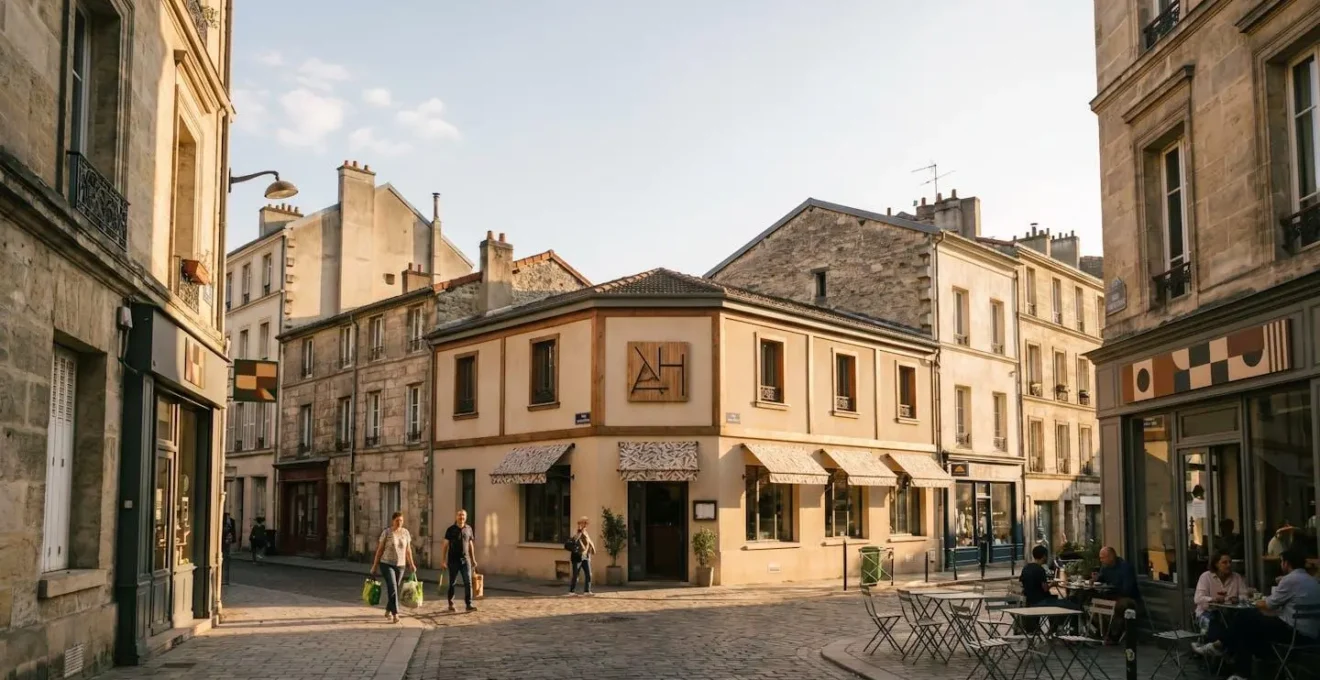
The real cultural connection of a hotel isn’t found in its decor or star rating, but in its operational DNA—its fundamental relationship with the local community.
- Globally standardized hotel chains are engineered for predictability, which often creates an isolating “hotel bubble” that filters out authentic local life.
- Truly immersive hotels act as porous bridges to their neighbourhood, staffed by locals and deeply integrated into the community’s economic and social fabric.
Recommendation: To find these gems, you must learn to diagnose a hotel’s “cultural porosity” by analyzing its staffing, communication, and business model before you book.
For the cultural traveller, there’s a quiet frustration that sets in upon entering a hotel room in a new city, only to find it could be anywhere in the world. The same beige walls, the same generic art, the same corporate-approved scent. This is the “hotel bubble,” a hermetically sealed environment designed for frictionless comfort that inadvertently isolates you from the very culture you travelled so far to experience. The common advice—choose boutique hotels, read reviews—scratches the surface but fails to address the core problem. Many modern “boutiques” are simply chains in disguise, and reviews can be misleading.
The solution isn’t about looking for superficial style cues. What if the key to unlocking authentic local life wasn’t about the hotel’s location or its interior design, but about its very structure? This guide proposes a new lens for choosing your accommodation, one inspired by cultural anthropology. We will move beyond the brochure to diagnose a hotel’s ‘cultural porosity’—its genuine ability to act as a bridge to the neighbourhood rather than a barrier. This involves learning to read the subtle but powerful signals in a hotel’s staffing, its business model, and even the language it uses.
By following this framework, you can learn to consistently identify and choose hotels that don’t just house you, but connect you. You’ll transform your accommodation from a simple place to sleep into your primary gateway for deep, meaningful cultural immersion. This approach empowers you to bypass the tourist-centric facade and engage directly with the vibrant, living culture of a place.
This article will guide you through the process of deconstructing what makes a hotel feel generic, and provide you with the tools to find those that are deeply woven into their local community. The following sections offer a structured approach to making your next hotel choice an intentional act of cultural discovery.
Summary: How to Find Hotels That Genuinely Connect to Their Neighbourhood
- Why Do International Hotel Chains Feel Identical Regardless of City?
- Why Do Five-Star Hotels Look Identical in Paris, Tokyo, and Dubai?
- Tourist District or Residential Quarter: Where Do Real Treasures Hide?
- How to Find Hotels Where Staff Actually Live in the Neighbourhood?
- Three-Generation Family Hotel or Design Boutique: Which Connects You to Culture?
- The English-Only Hotel Bubble That Blocks Cultural Immersion
- When Do Neighbourhood Cultural Events Happen Near Your Hotel?
- How to Find Neighbourhood Treasures Hotels Never Mention?
Why Do International Hotel Chains Feel Identical Regardless of City?
The feeling of déjà vu you get in a chain hotel, whether you’re in Seoul or Santiago, is not an accident; it’s the result of a meticulously engineered business strategy called brand standardization. The primary goal of a global hotel group is to deliver a predictable and consistent experience to its customers, mitigating risks for the traveller who values reliability above all else. This uniformity is a powerful asset for brand recognition and loyalty. When you book a room with a familiar brand, you know exactly what to expect in terms of room size, amenities, and service level, removing the uncertainty of travel.
The scale of this standardization is immense. A single hospitality giant like Marriott International operates under 30 unique flags, from Ritz-Carlton to Moxy. While each brand targets a different demographic, they are all built on a foundation of repeatable processes, global supply chains, and centralized management systems. This operational model is incredibly efficient for the corporation, but it inherently filters out local nuance. The furniture is sourced from international suppliers for cost-effectiveness, the breakfast menu is designed to appeal to a global palate, and the staff are trained on a universal service script.
This process creates a comfortable but isolating “hotel bubble.” The hotel’s culture is that of the brand, not the city it inhabits. It becomes a non-place, a sterile environment that could be anywhere and is therefore nowhere in particular. For a traveller seeking genuine connection, this model is a direct impediment, as the very systems that ensure predictability are the ones that erase local character and insulate guests from the authentic pulse of the neighbourhood just outside their door.
Why Do Five-Star Hotels Look Identical in Paris, Tokyo, and Dubai?
One might assume that the world of five-star luxury, with its focus on bespoke service and premium experiences, would be immune to the homogenization seen in mid-range chains. Paradoxically, the opposite is often true. The highest tier of the hospitality industry frequently exhibits an even more pronounced global uniformity, a phenomenon driven by the specific culture it is designed to serve: the “Global Elite” culture. For this clientele, the highest values are not local immersion, but frictionless service, absolute privacy, and, most importantly, extreme predictability.
The Culture of Global Luxury Standardization
The pure-play luxury properties tracked by top hospitality consultancies are masters of consistency. As detailed in industry analyses, the focus is on global engineering standards—flawless soundproofing, NASA-grade air filtration, and uniform water pressure—that are inherently placeless. These hotels use international suppliers and construction techniques that systematically erase local architectural nuances in favor of a globally recognized standard of luxury. The primary culture being served is one where a guest from New York expects the exact same flawless, frictionless experience in a suite in Tokyo, without the “inconvenience” of cultural difference.
This standardization is a direct result of prioritizing technical excellence over cultural expression. A top-tier luxury hotel in Dubai is not competing with a local riad; it is competing with its counterpart in Paris. The benchmark is a global standard of quiet, comfort, and service that can only be achieved through repeatable, industrial-grade systems. The architects, designers, and engineers who build these properties are often international firms who deploy the same high-spec materials and techniques across continents.
As a result, while the lobby might feature a token piece of local art, the hotel’s “operational DNA” is fundamentally international. It is a space designed for a transient global community, not as a gateway to the local one. For the cultural traveller, this means a five-star price tag is often an investment in a higher-quality bubble, not a more authentic experience. The luxury is in the isolation, not the connection.
Tourist District or Residential Quarter: Where Do Real Treasures Hide?
The choice of a hotel’s location is often presented as a simple trade-off between convenience and cost. However, from a cultural immersion perspective, the choice between a designated tourist district and a living residential quarter is a critical decision that determines where your money goes and what kind of community you interact with. Staying in the heart of a tourist zone might place you next to major landmarks, but it also places you within an economic ecosystem designed almost exclusively for visitors, often at the expense of local authenticity.
This is where the concept of economic leakage becomes crucial. As pointed out in sustainable tourism research, money spent in a central tourist zone is far more likely to “leak” out of the local economy. When you stay at an international chain hotel, dine at a global fast-food restaurant, and shop at a multinational retail store, a significant portion of your spending is repatriated to corporate headquarters far away. This creates a bubble where tourists primarily interact with other tourists and with businesses that cater only to them.
Conversely, choosing a hotel in a residential quarter fundamentally changes this dynamic. Your morning coffee comes from a family-owned café, your dinner from a neighbourhood restaurant where locals celebrate birthdays, and your daily interactions are with residents, not just service industry workers. Your spending is more likely to be retained within the community, supporting small, independent businesses. Recent research reveals that 73% of travelers want their hotel spending to benefit the local community, and choosing to stay in a residential quarter is one of the most direct ways to achieve this. These neighbourhoods are where the real treasures hide—the un-manicured parks, the local artisan workshops, the bakeries with cult followings—because they are part of a living, breathing community, not a curated tourist experience.
How to Find Hotels Where Staff Actually Live in the Neighbourhood?
While location is important, the single most powerful conduit to local culture is people. A hotel’s staff can either be gatekeepers to a corporate script or authentic ambassadors of their own community. The difference lies in their connection to the place. A hotel that prioritizes hiring staff who live in and love their neighbourhood is a hotel that has strong “cultural porosity.” These employees are not just performing a job; they are sharing their home. Their recommendations come from lived experience—the best taco stand is the one they go to after their shift, the hidden park is where they walk their dog.
This genuine connection is impossible to fake and is a world away from the concierge who simply consults a pre-approved list of tourist-friendly (and often commission-paying) establishments. A locally-rooted team offers unscripted, passionate, and deeply personal insights that can transform a trip from a sightseeing tour into a genuine cultural exchange. Identifying these hotels requires looking beyond the front desk and investigating the hotel’s operational DNA before you even book.
As the image above suggests, the most valuable interactions are often these unscripted moments of human connection. The warmth and authenticity of a staff member who is genuinely proud of their neighbourhood are the most reliable signals of a hotel that is truly integrated into its community. But how do you find these places? You need to become a bit of a detective, looking for subtle clues in the hotel’s online presence and communication style that reveal its staffing philosophy.
Action Plan: Verifying a Hotel’s Local Roots
- Staff Research: Check hotel staff profiles on professional networks like LinkedIn. Are the managers and key personnel long-term residents with deep local roots, or are they international career hoteliers on a two-year rotation?
- Website Linguistics: Scrutinize the “About Us” and blog sections of the hotel’s website. Look for subtle, non-native phrasing or local idioms that suggest the content was written by local ownership, not a polished global marketing firm.
- The Hyper-Specific Question: Call or email the hotel before booking. Don’t ask “Is there a good restaurant nearby?” Ask, “Where can I find the best ‘cacio e pepe’ within a five-minute walk that isn’t in a guidebook?” The quality and passion of the answer will reveal their true neighbourhood knowledge.
- Ownership vs. Management: Prioritize owner-operated hotels over those managed by separate, remote investment groups. An owner who lives in the community has a vested personal and economic interest in the neighbourhood’s well-being and character.
Three-Generation Family Hotel or Design Boutique: Which Connects You to Culture?
The common wisdom for avoiding chains is to choose either a traditional, family-run hotel or a trendy design boutique. This presents a false dichotomy. Neither model guarantees a connection to local culture, and both can be just as isolating as a global chain if their “operational DNA” is not aligned with the community. The key is not the category of the hotel, but its role and function within the neighbourhood ecosystem.
A three-generation family hotel can be a treasure trove of local history and stories, a place where the welcome is personal and the recipes are ancestral. However, it can also be a tired institution, resistant to change and disconnected from the contemporary pulse of the city, offering a glimpse into the past but not the present. Their focus might be on preservation rather than active community engagement.
Conversely, a “design boutique” can be a hyper-local cultural hub, or it can be an instrument of gentrification. Many are “parachuted in” by international investors, featuring a generic “global millennial” aesthetic that has more in common with Brooklyn than the actual neighbourhood it occupies. These hotels can feel more like an exclusive club than a welcoming community space. However, the best design boutiques function as modern-day cultural curators, actively engaging with local artists, artisans, and entrepreneurs. They see their role as a platform for showcasing the best of their community’s contemporary culture.
Case Study: Hotel Emma as a Cultural Hub
A prime example of a boutique hotel acting as a cultural catalyst is Hotel Emma in San Antonio. By transforming a historic brewery, it did more than just preserve a building; it became a source of pride and a central hub for the community. The hotel actively integrates local food, art, and history into its core experience, introducing visitors to the best of San Antonio’s offerings. As an analysis by Hospitality Net highlights, this approach has played a pivotal role in boosting the local economy and community spirit, proving that a thoughtfully conceived boutique hotel can be a powerful engine for authentic cultural integration and destination-building.
Ultimately, the choice is not between “family” and “design.” The question a cultural traveller must ask is: Does this hotel participate in its community, or does it merely occupy space within it? A hotel that hosts neighbourhood events, stocks its minibars with local products, and displays art from local galleries is actively contributing to the cultural fabric, regardless of whether it’s run by a third-generation hotelier or a young, design-savvy entrepreneur.
The English-Only Hotel Bubble That Blocks Cultural Immersion
Language is the lifeblood of culture. It carries history, humour, and a unique way of seeing the world. One of the most effective, yet subtle, ways that the “hotel bubble” isolates travellers is by creating an English-only environment. While convenient, this linguistic safety net inadvertently builds an invisible wall between the guest and the authentic local experience. When every interaction, from check-in to ordering room service, is conducted in flawless English, the traveller is never nudged out of their comfort zone.
This convenience comes at a cost: it robs you of the small, delightful, and sometimes clumsy interactions that make travel memorable. The effort of learning a few basic phrases—”hello,” “thank you,” “one coffee, please”—and using them with a local shopkeeper creates a moment of genuine human connection. An English-only hotel environment discourages this effort. It signals that you don’t need to adapt, because the destination has already adapted to you. This reinforces a passive, observational mode of travel, rather than an active, participatory one.
This isn’t an argument against English-speaking staff, but a call to look for hotels where multilingualism is a bridge, not a barrier. A hotel where staff seamlessly switch between their native tongue with a local vendor and English with a guest is a sign of a healthy, integrated environment. The desire for this kind of authentic interaction is overwhelming. The American Express 2023 Global Travel Trends report found that 85% of travelers want to visit destinations where they can truly experience the local culture. This experience is fundamentally blocked when language barriers are completely eliminated rather than navigated.
Travelers seeking authenticity, there’s nothing better than hearing from a local.
– Tan Bee Leng, Chief Commercial Officer, The Ascott Limited
As Tan Bee Leng, a leader in the hospitality industry, rightly points out, the unfiltered voice of a local is the ultimate currency of authenticity. This voice is most genuine in its native language. Seek out hotels that don’t just cater to you, but gently challenge you to engage with the local tongue. Look for websites that offer a local language version first, or front desk staff who greet you with a local salutation before switching to English. These are small signals of a hotel that is proud of its cultural identity and invites you to share in it, rather than shielding you from it.
Key Takeaways
- The uniformity of chain hotels is a deliberate strategy of brand standardization that prioritizes predictability over local character.
- True cultural connection stems from a hotel’s “operational DNA”—its staffing, business model, and genuine integration into the local community.
- Choosing hotels in residential quarters and those staffed by locals channels your tourist spending directly into the community, countering economic leakage.
When Do Neighbourhood Cultural Events Happen Near Your Hotel?
Once you’ve chosen a hotel that acts as a bridge to the community, the next step is to walk across that bridge. The most vibrant cultural experiences are often not the ticketed, advertised events, but the spontaneous, everyday gatherings of local life. These are the neighbourhood school concerts, the weekly farmers’ markets, the impromptu games of pétanque in the square, or the religious street processions. These events are not “for tourists”; they are simply where life happens, and where tourists are welcome to respectfully observe and participate.
The concierge at a generic hotel will direct you to a polished “cultural” show, often a performance specifically staged for visitors. The staff at a culturally porous hotel will tell you about the annual neighbourhood festival that’s happening just two blocks away. Your mission is to learn how to find the latter. This requires an “anthropological” approach to information gathering, looking for analog and un-curated sources of information that exist outside the digital tourist economy.
This means getting out and paying attention to the fabric of the neighbourhood itself. The real event calendars are not on a website, but on the lampposts, in the bakery windows, and on the community center chalkboards. Here are some strategies to uncover these hidden gems:
- Go Analog: Pay close attention to flyers on telephone poles, posters in shop windows, and handwritten signs in cafes. These are the most authentic sources for hyper-local happenings.
- Local Language Search: Use translation tools to search for local-language terms. Instead of “market in Rome,” search for “mercato rionale Trastevere” to find the specific neighbourhood markets.
- Distinguish the Audience: Learn to tell the difference between “Events for Tourists” (performances with a clear start and end time) and “Events Where Tourists Are Welcome” (ongoing community gatherings like a weekend flea market or a local sports league game in a park).
- Follow the Sounds: If you hear music from a local school or the sounds of a community gathering, be curious. Follow the sound and see where it leads you.
Discovering these events provides a window into the soul of a community. It’s in these unscripted moments, as depicted in the scene above, that you move from being a spectator to a temporary part of the neighbourhood’s rhythm. It requires a bit more effort, but the reward is a level of cultural understanding and connection that no guided tour can ever provide.
How to Find Neighbourhood Treasures Hotels Never Mention?
The ultimate goal of choosing the right hotel is to use it as a launchpad for discovering the “neighbourhood treasures” that make a place unique. These are the small, often intangible details that will never appear in a guidebook or on a “top ten” list. They are the old woman who sells one perfect type of pastry from her window every morning, the tiny workshop where a craftsman makes bespoke leather goods, the hidden courtyard where locals gather for coffee, or the street art that tells a political story. Hotels, even good ones, rarely mention these because they are not official “attractions.” They are simply life.
Finding them requires a fundamental shift in mindset: from a tourist’s goal-oriented “seeing” to a traveller’s curious “noticing.” It means slowing down, putting away the map, and engaging your senses. It’s about paying attention to the textures of the city—the worn cobblestones, the patina on a brass doorknob, the smell from a basement bakery. The vast majority of travellers, including the 86% of millennials who prefer travel that allows cultural immersion, miss these details because they are too focused on getting to the next major sight.
To cultivate this art of noticing, you must actively resist the tourist’s itinerary. Dedicate an afternoon to “getting lost” in your hotel’s residential neighbourhood. Your only goal should be to follow what interests you. If a particular street looks intriguing, walk down it. If you see locals entering a non-descript door, see what it is. This is not about aimless wandering, but purposeful, curiosity-driven exploration. It’s about trusting that the most memorable discoveries are the ones you make for yourself, not the ones that were planned for you.
This approach transforms travel from a process of consumption (collecting sights) to a process of connection (understanding a place). The treasures you find will be your own, imbued with the personal story of their discovery. These are the memories that last long after the images of famous monuments have faded. Your hotel choice was the key that unlocked the door to the neighbourhood; this mindset is how you step through it and find what truly lies within.