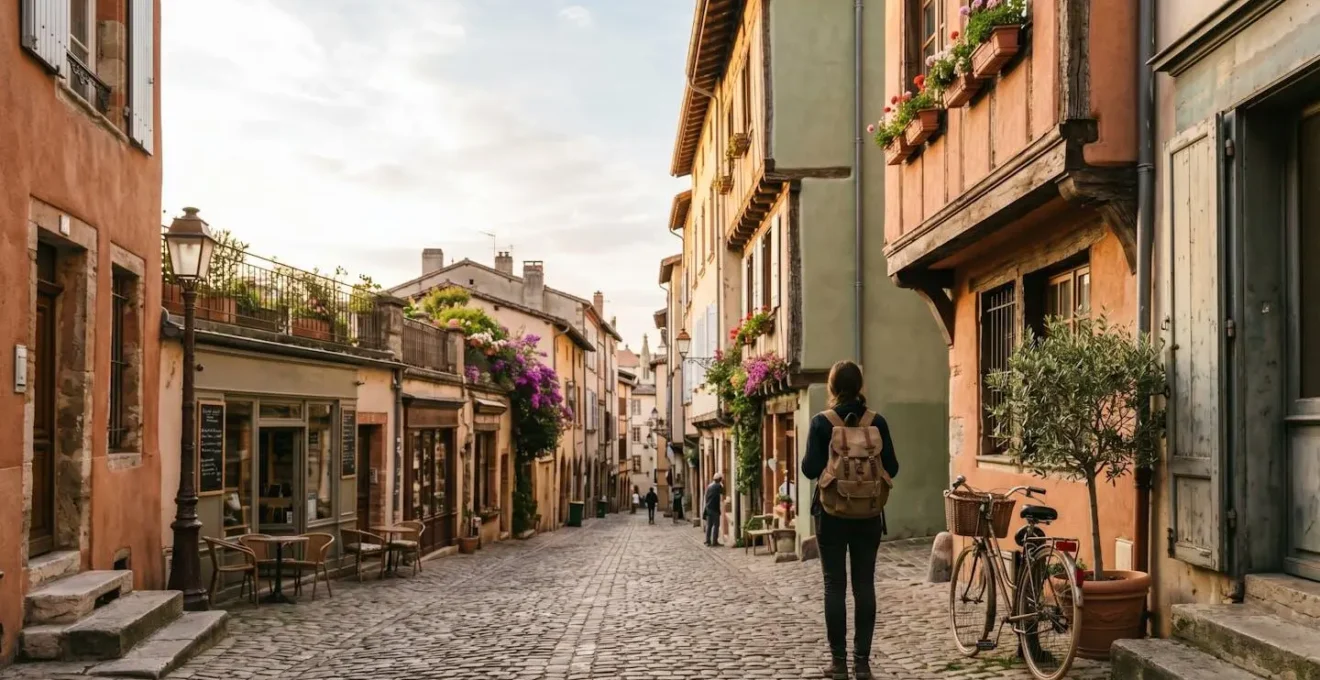
The most authentic travel experiences aren’t found in a guidebook; they’re decoded from the city’s signals, starting with the hotel you choose.
- Most international hotel chains and popular tours are designed for standardization, not local immersion, creating a bubble of “experience homogenization.”
- A hotel’s true character is revealed in its digital footprint—its partnerships, its staff features, and its role as a community “third place,” not its star rating.
Recommendation: Stop looking for lists of “hidden gems.” Instead, learn to vet potential hotels and experiences by how deeply they are woven into the fabric of their neighbourhood.
You’ve felt it too, haven’t you? The slight dissonance of stepping out of a hotel that could be in any city in the world, onto a street that promises a unique culture. You’re handed a map with pre-marked attractions and offered a brochure for the city’s “most popular” bike tour. The concierge is helpful, but their recommendations feel… rehearsed. You are physically present in a new place, yet culturally you remain in a bubble, shielded from the very authenticity you travelled to find.
The standard advice is to “ask a local” or “just get lost.” But which local? And what if getting lost just leads you to another tourist thoroughfare? Many travellers resign themselves to this reality, believing the comfort of a familiar hotel brand is a necessary trade-off. After all, a significant 47% of U.S. travelers prefer global hotel chains for their loyalty programs and predictable service levels. But what if the real key to unlocking a city isn’t about ditching comfort, but about changing your search criteria entirely? What if the most powerful tool wasn’t a better map, but a better way of seeing?
This is not a guide that gives you a list of “secret” spots. This is a manual for developing an urban explorer’s mindset. We will dissect the systems that create travel monotony and give you a framework for decoding the urban environment. You’ll learn to see hotels not as just a place to sleep, but as the first and most critical clue to the character of a neighbourhood, enabling you to find the treasures that are hidden in plain sight.
This guide will walk you through the process of dismantling the tourist-industrial complex, from understanding its mechanics to choosing your base of operations and mapping your own adventures. Ready to trade the brochure for a real discovery?
Contents: Your Compass for Urban Exploration
- Why Do International Hotel Chains Feel Identical Regardless of City?
- Why Do Most City Bike Tours Cover Identical Routes?
- How to ‘Read’ a Neighbourhood Before You Arrive
- Decoding the Digital Footprint: Finding Hotels That Break the Mould
- Beyond the Brochure: The Art of Vetting Truly Local Experiences
- The ‘Third Place’ Principle: Why Your Hotel Lobby Should Feel Like a Local Café
- Mapping Your Own Path: Tools for the Modern Urban Explorer
- How to Choose Hotels That Connect You to Neighbourhood Culture?
Why Do International Hotel Chains Feel Identical Regardless of City?
The feeling of déjà vu you get when stepping into a chain hotel in Berlin that looks suspiciously like the one you stayed at in Boston is no accident. It’s the result of a business model built on scalability and standardization. For major hotel groups, the primary objective is to deliver a predictable, risk-free experience to a global customer base. This means standardized room layouts, uniform service protocols, and centrally-managed supply chains for everything from the lobby furniture to the breakfast buffet. The goal is efficiency, not eccentricity.
This phenomenon, which can be called experience homogenization, is deeply rooted in market economics. In the United States alone, chain hotels represent a staggering 70% of the market share. This dominance allows them to leverage massive economies of scale. Sourcing artisanal soap from a small local maker is far more complex and expensive than ordering 100,000 units of a generic brand. Similarly, designing a lobby that reflects the unique architectural heritage of a specific Lisbon neighbourhood is a one-off cost, whereas deploying a pre-approved design template is a repeatable, and therefore cheaper, process.
The result is a hospitality landscape where the hotel is intentionally disconnected from its physical location. It becomes a non-place, an interchangeable node in a global network. While this offers a sense of security and familiarity for some travellers, for the urban explorer, it represents the first wall between them and the authentic character of the city. The hotel, instead of being a gateway into the neighbourhood, becomes a fortress of comforting sameness.
This system isn’t malicious; it’s just business. But recognizing it is the first step toward consciously choosing to step outside of it.
Why Do Most City Bike Tours Cover Identical Routes?
Just as hotels fall into patterns of standardization, so do city experiences. The classic example is the guided bike tour. Whether in Amsterdam, Copenhagen, Montreal, or even a peaceful escape in Portugal, you’ll often find multiple competing companies offering routes that are suspiciously similar, all culminating at the same handful of photogenic landmarks. This isn’t a lack of imagination; it’s a convergence of logistical and economic constraints that are invisible to the average tourist.
The route of a city bike tour is a carefully calibrated equation of safety, efficiency, and marketability. Tour operators must navigate a complex web of constraints: bike lane availability, traffic patterns, group size regulations, and the physical stamina of a diverse group of riders. The chosen path is often the one that minimizes risk and maximizes the number of “must-see” sights within a 2-3 hour window. This optimization inevitably leads different operators to the same logical conclusions, creating a de facto “tourist highway” through the city.
This entire process is magnified by the sheer scale of the industry. The global bicycle tourism sector is not a niche market; analysts project it will be worth a massive USD 235.1 million by 2035. With that much at stake, operators are incentivized to create products that are easy to sell. A tour promising “The Top 10 Sights” is a much easier sell to a first-time visitor than one promising “An Obscure Look at 1970s Brutalist Architecture.” The result is a feedback loop where market demand reinforces a standardized, surface-level product.

These mechanical constraints and market forces create a curated, simplified version of the city. It’s a perfectly pleasant experience, but it’s a product, not a discovery. It’s a performance of authenticity, designed for mass consumption. The truly unique routes—the “desire paths” of the city—are left for individual explorers to find.
The challenge, then, isn’t to find a “better” tour, but to develop the skills to create your own, starting with where you choose to stay.
How to ‘Read’ a Neighbourhood Before You Arrive
The work of an urban explorer begins long before you set foot in a new city. It starts in the digital realm, by learning to “read” a neighbourhood’s character through the clues it leaves online. This is not about reading top 10 lists; it’s about forensic observation. Your primary tool is the humble map service, but your method is that of a detective.
Pull up your target neighbourhood on a map and switch to a street-level view. Now, turn off the “points of interest” filter and start your virtual walk. Ignore the famous landmarks. Instead, pay attention to the texture of the streets. What do the shopfronts look like? Are they independent bakeries, art galleries, and bookstores with unique signage, or are they dominated by international fast-food chains and mobile phone shops? A high density of one-of-a-kind businesses is a strong signal of a vibrant local economy and a distinct neighbourhood identity.
Look for the unofficial signs of life. Are there community notice boards plastered with flyers for local events? Are there well-tended planter boxes outside of apartment buildings? Can you spot street art that feels commissioned and respected, rather than like random vandalism? These are all indicators of an engaged and proud local community. Conversely, an abundance of “For Lease” signs, payday loan shops, and shuttered storefronts tells a different story. This digital reconnaissance gives you an unfiltered glimpse into the daily life and economic health of an area, a much more reliable metric than any travel blogger’s review.
Once you’ve identified a few promising zones, your next task is to apply this same forensic lens to the hotels within them.
Decoding the Digital Footprint: Finding Hotels That Break the Mould
A hotel’s website is its official narrative, but for an urban explorer, it’s a treasure trove of clues. You must learn to read between the lines of the marketing copy to discern a hotel’s true philosophy. Is it merely a base for sleeping, or is it an active participant in its neighbourhood’s culture? The difference lies in the details of its digital footprint.
Start by ignoring the main photo gallery of pristine, empty rooms. Instead, navigate to the “About Us,” “Journal,” or “Events” sections. A hotel deeply connected to its community will showcase it. Do they feature interviews with their staff, highlighting the local bartender or the concierge who is also a neighbourhood artist? Do they host events that are open to the public, like book readings, live music, or a pop-up market for local artisans? These are strong signals that the hotel sees itself as a community hub, not just a tourist silo.
Next, scrutinize their partnerships. Who supplies their coffee? Whose art is on the walls? What brand of snacks are in the minibar? A generic hotel will list partnerships with national distributors. A hotel with a soul will proudly name-drop the local roastery down the street, the nearby gallery they feature, and the small-batch chocolate maker from the next town over. These aren’t just amenities; they are endorsements and evidence of a real, symbiotic relationship with the local economy. If this information isn’t on their website, check their social media tags to see who they’re collaborating with.
Your Audit Checklist: Vetting a Hotel’s ‘Local’ Claims
- Staff & Story: Look for a page that names and tells the stories of their team members, not just the founder. Is the hotel a faceless corporation or a collection of local people?
- Local Sourcing: Check their blog, menus, or “partners” page. Do they proudly mention the local bakery that supplies their bread or the nearby farm for their produce?
- Events Calendar: Does their events list include things a local would actually attend (e.g., workshops, markets, artist talks) or is it just a weekly “guest happy hour”?
- Art & Decor: Do they credit the local artists whose work is on display? Is the furniture sourced from nearby artisans or a generic international supplier?
- Social Media Tags: Go beyond their polished feed. Look at photos they are tagged in. Do you see a mix of locals and tourists using the space, or is it just influencers in empty lobbies?
This skill isn’t just for booking hotels; it can be applied to vetting every aspect of your trip.
Beyond the Brochure: The Art of Vetting Truly Local Experiences
Once you’ve chosen a hotel that acts as a true neighbourhood anchor, the next step is to apply the same critical lens to the experiences and activities you pursue. Just as bike tours can fall into a standardized rut, so can cooking classes, walking tours, and craft workshops. The label “local” or “authentic” is easy to apply but hard to earn. Vetting these experiences requires you to look past the five-star reviews and dig into the substance of the operation.
First, investigate the source. Who is running the experience? Is it a large, venture-backed company with a slick booking platform, or is it an individual or small collective with a clear passion for their craft? Look at the “About” page. A truly local experience is often born from a personal story—a chef who wants to share their grandmother’s recipes, a historian who has lived in the neighbourhood for 40 years, an artist who wants to open up their studio. A lack of a personal story is a red flag. It may suggest the “experience” is a formula developed in a boardroom and deployed by low-wage gig workers, not a genuine cultural exchange.
Second, analyze the content and context. Does the description of the experience use specific, knowledgeable language? A walking tour that promises to show you the “hidden history of the Jewish quarter’s printing presses” is far more credible than one that just promises “Prague’s best sights.” Look for details that only a true local would know. Furthermore, consider the scale. A cooking class for four people in a home kitchen is fundamentally different from one for twenty people in a sterile commercial space. Small scale is often a proxy for authenticity, as it is harder to standardize and easier to personalize.
This search for genuine connection leads us to a powerful concept for identifying the right kinds of places: the “Third Place.”
The ‘Third Place’ Principle: Why Your Hotel Lobby Should Feel Like a Local Café
In urban sociology, the “Third Place” is a concept that refers to the spaces where people gather and connect outside of their two primary environments: home (the first place) and work (the second place). These are the cafés, pubs, libraries, and public squares that foster a sense of community. For an urban explorer, seeking out a hotel that functions as a third place for its own neighbourhood is the ultimate hack for tapping into the local scene.
A hotel lobby designed as a third place looks and feels fundamentally different from a traditional one. A traditional lobby is a transitional space—a place you hurry through on your way to the elevator. It is often sterile, quiet, and designed solely for the use of paying guests. In contrast, a lobby designed as a third place is a destination in its own right. It features comfortable, varied seating that encourages lingering, communal tables that invite conversation, and accessible power outlets that signal “you are welcome to stay a while.”

Crucially, it is porous to the community. The coffee bar is so good that locals make it their morning stop. The bar is a popular after-work spot for people who live and work nearby. There might be a small, curated bookstore in the corner or a rotating display of local art. The key indicator is the mix of people. If you look around and see a blend of travellers with suitcases and locals with laptops, you’ve found a genuine third place. This is a hotel that has successfully integrated itself into the social fabric of the neighbourhood.
This approach gives you a powerful home base, but the spirit of exploration still requires you to chart your own course through the city streets.
Mapping Your Own Path: Tools for the Modern Urban Explorer
The final pillar of the urban explorer’s mindset is taking control of your own navigation. This means moving beyond simply following a blue dot on a map and instead, actively creating your own cartography. It’s about turning the map from a prescriptive document into a personal journal of discovery. Modern digital tools, when used with intention, can be incredibly powerful for this.
Before your trip, start a custom map for your destination city (Google My Maps is an excellent, free tool for this). As you do your research—reading articles, seeing photos, identifying potential third-place hotels—drop a pin for everything that piques your interest. Don’t just pin the location; add a note about *why* it interested you. “Bar mentioned in an interview with a local musician,” “Bookstore with a focus on political history,” “Street with interesting 1930s architecture.” This process builds a personalized constellation of interests, not a generic tourist checklist.
Once you’re on the ground, use this map as a loose guide, not a rigid itinerary. The goal isn’t to check off every pin, but to see the connections between them. As you walk from one pin to another, pay attention to what lies in between. This is where the real magic happens. You might discover a small courtyard, a unique shop, or a quiet park that wasn’t on any list. These are your “desire paths”—the unofficial but often more interesting routes. Add them to your map. Over a few days, your map will transform from a collection of other people’s recommendations into a rich, layered document of your own personal journey through the city. It becomes a story, your story, written in the language of geography.
It’s a creative and deeply rewarding process that ensures your experience of a city is truly your own.
Key takeaways
- Standardization in the travel industry is a feature, not a bug; to find authenticity, you must consciously opt out of systems designed for efficiency.
- A hotel’s connection to its neighbourhood is a measurable quality, visible in its partnerships, events, and use of its space.
- The mindset of an urban explorer is not about finding secret places, but about developing a method for seeing and decoding the places that are hiding in plain sight.
How to Choose Hotels That Connect You to Neighbourhood Culture?
Ultimately, choosing a hotel that connects you to neighbourhood culture is a deliberate act of rejecting the passive consumer role. It means recognizing that your choice of accommodation is the single most important decision that will shape your travel experience. With a reported 75% of travellers seeking more authentic, local experiences, the demand is clearly there. The disconnect happens in the execution—knowing how to find them.
The solution is to adopt the investigative framework we’ve outlined. It involves a fundamental shift from asking “Where should I stay?” to “How does this hotel exist within its community?” You must combine digital reconnaissance—reading a neighbourhood’s street-level signals and decoding a hotel’s online footprint—with a conceptual understanding of what makes a space feel alive, like the ‘Third Place’ principle. It’s about prioritizing hotels that are active community members over those that are simply comfortable lodging.
This isn’t about shunning comfort or quality. In fact, hotels that are deeply invested in their community often exhibit a higher level of care and attention to detail across the board. They have a reputation to uphold not just with transient guests, but with their neighbours. The success of such models proves that profitability and community engagement are not mutually exclusive; they can be powerfully reinforcing.
Case Study: The Dar Ben Gacem Model in Tunis
A boutique hotel in the Medina of Tunis, Dar Ben Gacem, serves as a powerful example of community-driven hospitality. Instead of importing standardized services, the hotel’s entire model is built on local integration. They prioritize hiring from the immediate neighbourhood, source from informal local suppliers for their needs, and reinvest profits into community revitalization projects. Their cultural programming is designed with and for the community, creating immersive experiences for guests that simultaneously drive local economic engagement. This approach has led to high guest satisfaction and strong staff retention, demonstrating how a hotel can be a catalyst for, not just a bystander in, its neighbourhood’s culture.
The next time you plan a trip, don’t just book a room. Start your exploration from your desk. Decode the signals, find a true neighbourhood anchor, and discover the city that exists just beyond the lobby doors.